60 Cybercabs in the Lot, FSD Jailbreakers Getting Nuked, and a Cheap SUV Rumor
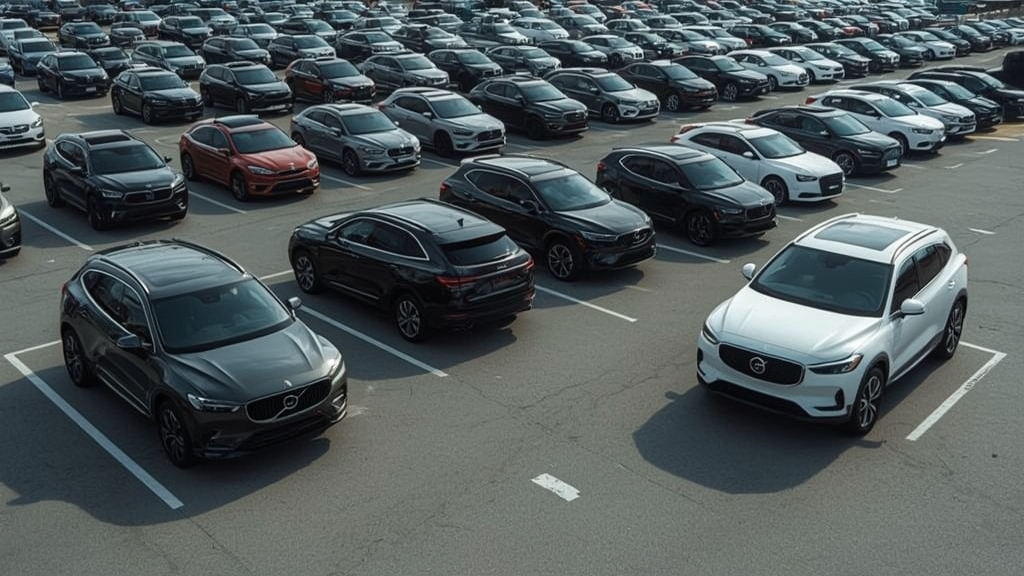
Sixty Cybercab units showed up in the outbound lot at Giga Texas on April 8, 2026. That's the largest single concentration spotted to date, which means Tesla is past the "we assembled one for a photo op" phase of this program. There are actual cars sitting in a parking lot waiting to go somewhere.
The Production Ramp Is Real. Slow, But Real.
The first Cybercab rolled off the Giga Texas line in February 2026. Tesla confirmed April 2026 as the start of volume production, though Musk was upfront that output follows an S-curve ramp. The stated target is hundreds of units per week from the Giga Texas line, which is modest by mass-market standards but not nothing.
Here's the detail that caught my attention: early units have been spotted with steering wheels and white seats. The production Cybercab is designed to have neither. No steering wheel, no pedals, built exclusively for unsupervised FSD. So what are these? Regulatory test vehicles? Pre-production validation builds that haven't been configured to final spec? I don't know, and nobody seems to be saying officially. But it's worth noting that the first 60 cars sitting in that lot apparently don't look like what Tesla has been showing in its marketing.
The ramp is still real. Sixty cars is sixty more than existed a few months ago.
Tesla Is Revoking FSD From People Who Cheated to Get It
Separately, Tesla is running a systematic crackdown on third-party FSD bypass devices. The setup: vendors sell roughly €500 USB-style modules that plug into the vehicle's CAN bus, spoofing regulatory approvals to unlock FSD features in countries where it hasn't been officially authorized. These reportedly work on both HW3 and HW4 hardware.
The markets affected include Europe, China, Japan, South Korea, and the UK. In China alone, over 100,000 owners reportedly installed some version of this. That's not a niche problem.
Tesla's response has been layered. In-car notifications and emails first, warning owners that unauthorized modifications violate terms of service. Then remote disabling of FSD capabilities. And for some vehicles, permanent revocation of FSD access without refund.
The "without refund" part is going to be painful for some owners. But the counterargument writes itself: these people were running unsupervised autonomy features in jurisdictions that haven't cleared them, using hardware specifically designed to deceive Tesla's systems. If something goes wrong in that configuration, the legal and reputational fallout lands on Tesla too. Buying a €500 device to unlock banned features is a gamble, and it looks like that gamble is coming due.
FSD v15 Is the Next Big Jump
Current deployed version is FSD v14.3, with additional point releases coming for polish. Musk posted on April 9, 2026 that "V15 will far exceed human levels of safety, even in completely unsupervised and complex situations."
The architectural claim is specific: v15 runs on a large AI model with approximately 10x the parameters of the current smaller model. That's a meaningful technical jump, not a routine update. Whether the real-world driving improvement is proportional to the parameter count, I genuinely don't know. But it explains why Tesla is treating the current releases as polish work rather than major iterations.
I'll believe the safety claims when I see independent validation. The parameter jump is real. The outcome remains to be seen.
And Reuters Says a Smaller Tesla SUV Is Coming
Reuters reported that Tesla is in the early stages of developing a compact electric SUV, shorter than the Model Y, built in China on a new platform. Suppliers have been contacted. That's the depth of what's confirmed right now, which isn't much.
Context worth keeping in mind: Tesla killed its "Redwood" budget EV project in 2024. And on March 25, 2026, Musk posted that "Something way cooler than a minivan is coming" from Tesla. Whether these are related is speculation at this point.
Meanwhile, the Model Y L (the stretched six-seat variant) is doing well in China. Wait times pushed into February 2026, and Tesla recently expanded it to eight additional Asian markets. Still not available in the US, which is a whole separate story about product segmentation I'll get into another time.
Net Result
The Cybercab is actually being produced in real quantities, even if the early units look a little different than expected. Tesla is actively enforcing its FSD terms globally, and some owners are finding out the hard way that the company has leverage they didn't fully account for. And there are product hints on the horizon, though most of them are still at the rumor stage.
Not a slow week.
Source: Teslarati