FSD 14.3.3 Handled 150 Highway Miles Well. Then Came the Parking Lot.
I keep track of FSD versions the way some people track software betas: looking for the specific things that used to drive me crazy, watching to see if they've improved. So when someone put 14.3.3 through a 150-mile stress test on the Pennsylvania Turnpike in a Model Y, I paid attention. The highway results were genuinely good. What happened at the destination was not.
The Highway Performance That Actually Impressed Me
The Pennsylvania Turnpike is a reasonable test route. It's not the easy stuff. You've got tunnels, toll plazas, heavy truck traffic, and lane configurations that change without much warning.
FSD 14.3.3 recognized lane-ending arrows painted on the road and aborted a passing maneuver to fall in behind slower traffic. That's the kind of thing where older versions would've just committed and forced the driver to intervene. It didn't here.
More interesting: when a tractor-trailer drifted into the lane, the system detected it, shifted the car's position toward the shoulder to create buffer space, and then completed the pass. That's not just collision avoidance. That's something closer to how an attentive driver actually thinks about sharing a lane with a 40-ton truck. You don't just brake. You create space first.
Inside the Blue Mountain Tunnel, FSD saw the double lines and didn't try to change lanes. And at toll plazas, it kept rolling through consistent with Toll by Plate. (No drama at the booth, which is more than I can say for some drivers.)
For 150 miles of highway, this is a solid showing. The contextual awareness, the tunnel rules, the truck situation. It's not nothing.
Then It Reached the Parking Lot
At the Fort Littleton Supercharger, FSD couldn't back into a spot and needed a manual takeover. That's a known weak point and not particularly surprising. Reverse parking has been awkward for a while.
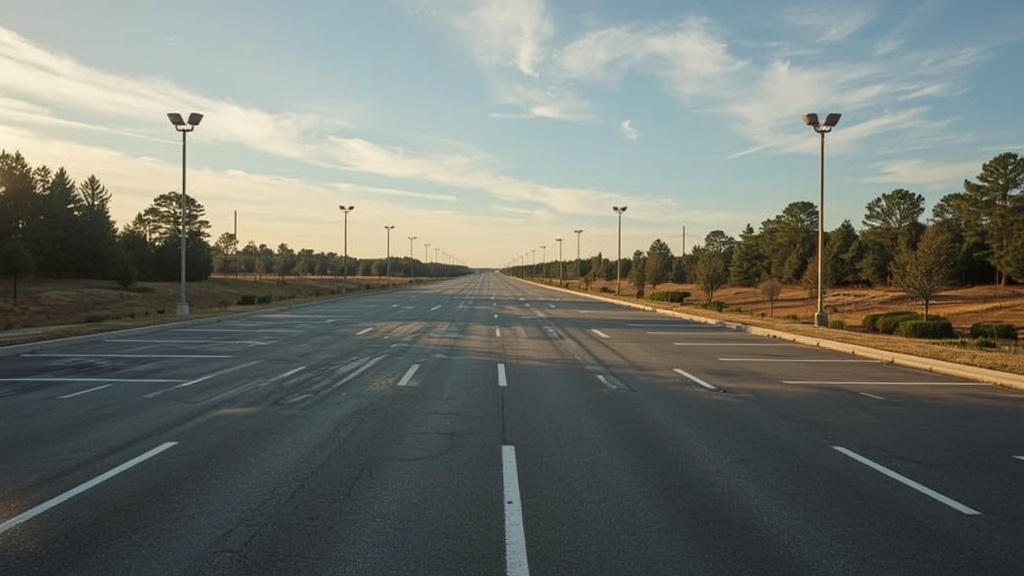
But the destination parking loop issue is the one worth paying attention to. The car entered a parking lot, couldn't resolve where to go, and circled four times before the driver took over. And this isn't a one-off. Multiple owners have reported the same behavior: FSD entering a loop around a destination parking lot and just. not. stopping.
Four laps is a long time to wait before grabbing the wheel. The system had every opportunity to recognize it was repeating the same path and hadn't solved the problem. It didn't adapt. It just kept going.
What This Pattern Tells Us
Highway FSD and parking lot FSD feel like two different products right now. The highway system has gotten good at reading road context: painted markings, other vehicles, tunnel rules, toll infrastructure. It's reacting to defined inputs with reasonable outputs.
Parking lots are different. They're semi-structured environments with ambiguous lanes, mixed pedestrian and vehicle traffic, and destination logic that requires the car to actually decide where it's going and commit. That appears to be where 14.3.3 still struggles.
One possibility is that the training data for parking lot navigation is just thinner than highway miles. Another is that the failure mode itself (looping) is a kind of safe fallback that the system defaults to when it can't resolve a decision. But four laps isn't safe in any practical sense. It's just delayed failure.
Also worth noting: FSD Speed Profiles exist (Standard and others) but were described as relatively difficult to adjust on the fly during a drive. That kind of friction matters when you're trying to adapt to conditions in real time.
Where This Leaves 14.3.3
If you're using FSD primarily on highways and structured road environments, 14.3.3 looks like a meaningful step forward. The contextual awareness improvements are real. But if your use case ends in a parking lot (and most drives do), you're still the one doing that part.
That's not a reason to dismiss the highway progress. It's just an accurate description of what the version can and can't do. The Turnpike performance earned the praise. The parking lot behavior earned the asterisk.
Source: Teslarati