Tesla App 4.58.5 Adds a Live FSD Indicator (And a Hint About What's Coming Next)
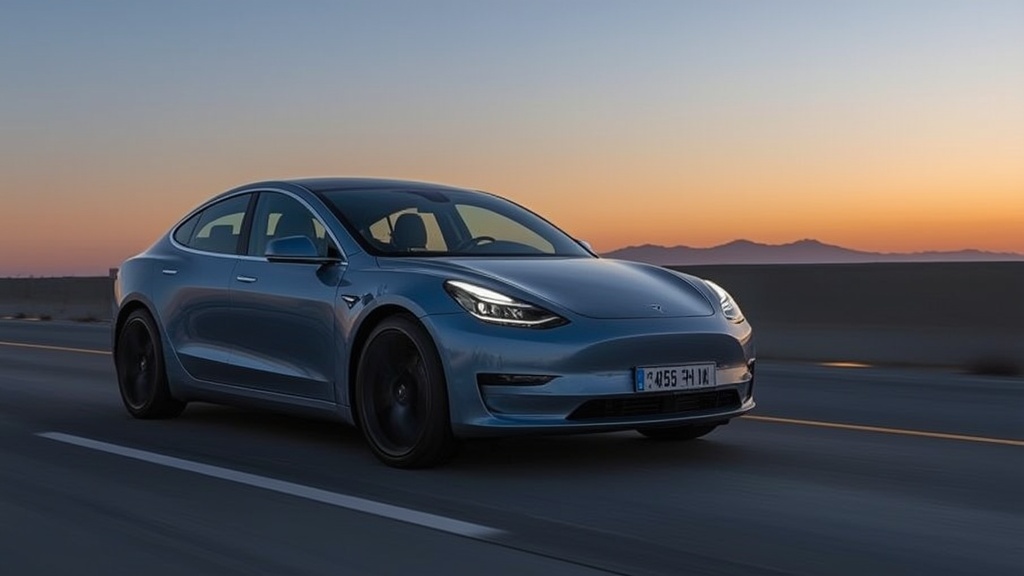
Tesla pushed app version 4.58.5 recently and the most notable addition is something I've wanted for a while: a live indicator that shows when FSD is actively engaged. Bright blue text beneath the speed readout. And if you're monitoring remotely, you get the glowing blue navigation path that FSD users see on the main touchscreen. That's actually useful, not just a cosmetic status light.
What You Need to Get It Working
Two things are required: app version 4.58.5 on your phone and vehicle software 2026.20.6.1 on the car. That vehicle software version has reached nearly 40% of the Tesla fleet as of July 2026, so rollout is moving at a decent clip. The feature has been confirmed on Hardware 3 vehicles (specifically an HW3 Model S), and Tesla says it will extend to all vehicles regardless of chip platform once both sides are updated. So if you're on older hardware, it's coming, just not yet.
The remote view part is what I find actually interesting. You can pull up the app while the car is driving itself and follow the blue navigation path it's plotting. Whether that's useful for most people is debatable, but if you're a fleet owner or someone whose car is being driven by a family member, real-time FSD status matters.
The Cabin Camera Hint
Also buried in 4.58.5: a hint that Tesla plans to use the cabin camera to verify driver identity before FSD can activate. No official announcement, just app code pointing that direction. This could mean driver profiles tied to FSD permissions (which has insurance implications), or more likely, it's groundwork for the commercial robotaxi model where knowing who's in the vehicle becomes a practical and probably regulatory requirement.
Tesla launched unsupervised robotaxi rides in Miami recently, making Florida the third state with fully autonomous operation live. That's the direct context for why identity verification matters now. As FSD moves from personal feature to commercial service, the cabin camera goes from convenience to infrastructure.
The Supercharger Transition Is Complete
Separately from the app update, Gigafactory New York produced its final V3 Supercharger cabinet in March 2026. More than seven years of production and 15,000 units. That's the end of an era, and the pivot to V4 is now complete. If you're still using V3 stalls, you'll keep using them for years. But no new ones are being made.
The Folding Unit Supercharger (introduced in March 2026 as a factory pre-assembled V4 station on an industrial hinge system) has now arrived in Europe. Broader rollout is targeting major motorway rest stops in Q3 2026, which is decent timing for summer travel season.
The economics of the Folding Unit are worth understanding. It packs 33% more stalls per delivery truck compared to traditional installations. Installation time drops by roughly half. Overall deployment costs are down more than 20%. Each unit pairs one V4 power cabinet with eight charging posts, and those posts deliver up to 500 kW per stall for passenger vehicles and up to 1.2 MW for the Tesla Semi. Compared to V3, that's twice the stalls per cabinet at three times the power density. And the cables on Folding Units are longer, which means non-Tesla EVs can use them from day one.
The Bigger Picture
The app update is incremental progress of the useful kind. The FSD indicator doesn't change how the car drives, but visibility into what it's doing, remotely, in real time, closes a gap that's been annoying. The cabin camera hint is the thread worth watching. If Tesla gates FSD activation behind identity verification, that reshapes fleet ownership, car lending, and eventually the robotaxi model. It's not live yet, but it's clearly coming.
On the Supercharger side, V3 is legacy hardware now. The Folding Unit makes V4 expansion faster and cheaper, and Europe getting it on motorway corridors before summer ends is a meaningful step. The deployment math (33% more stalls per truck, half the install time) means Tesla can cover more ground with the same logistics. That's good for everyone charging there, Tesla owner or not.
Source: Teslarati