Tesla App 4.58.5 Shows Your FSD Is Running, And That's Just the Start
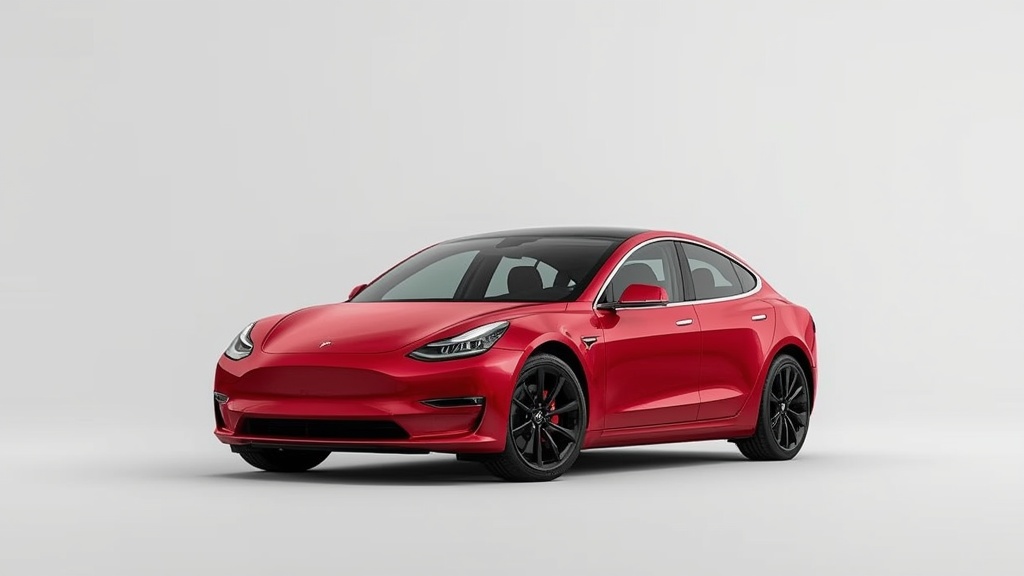
Tesla pushed app update 4.58.5 and buried inside it is something I've wanted for a while: a live indicator that tells you when FSD is actually engaged. It appears as bright blue text beneath the speed readout, and there's also a glowing blue navigation path in the app while the system is running. Clean, visible, hard to miss.
The indicator works across hardware generations (HW3 and HW4 both confirmed), and Tesla says it'll eventually roll out to all vehicles once both the app and vehicle software are updated. The vehicle-side requirement is software version 2026.20.6.1, which had reached nearly 40% of the fleet by early July 2026. So if you haven't seen it yet, you're probably not far out.
On its own, this seems like a small cosmetic update. But there's more going on in 4.58.5 than a blue icon.
The Cabin Camera Hint
Buried in the same update is a hint that the cabin camera will be used to verify driver identity before FSD can be activated. Tesla hasn't spelled out exactly what that looks like in practice, but the direction is obvious. As unsupervised robotaxi rides expand (Miami is now the third state, making Florida the latest addition as of summer 2026), Tesla needs tighter controls over who's engaging autonomy and when. A camera-based identity check before FSD activates would be a reasonable part of that accountability layer.
It's worth watching how that develops. Right now it's just a hint in the app code. But the fact that it's there at all tells you where Tesla is heading.
Grok Is About to Get Wired Into How Your Car Actually Drives
Grok has been available in Tesla vehicles since July 2025. European vehicles got it in February 2026. Then in spring 2026 it gained a hands-free wake word ("Hey Grok"), location-based reminders, and natural-language navigation. Each step made it more useful, but it was still essentially a voice assistant layered on top of the car.
That's about to change in a meaningful way.
Tesla VP of AI Software Ashok Elluswamy confirmed the company is building a feature where you can give FSD spoken contextual driving instructions it will remember for future trips. Not single-session commands. Persistent preferences the system carries forward. And on June 23, 2026, Elon Musk confirmed that Grok voice commands will pass directly to FSD's planning layer by September 2026.
If that actually ships on schedule (and I'll believe it when I see it), this is a bigger deal than the indicator. One possibility is that this becomes how Tesla differentiates its autonomy product long-term: not just a car that drives itself, but a car that gradually learns to drive like you specifically, based on what you tell it. "Avoid left turns on busy arterials." "Take the longer highway route." The system remembers it for next time.
Whether September delivers that or not, the architecture they're describing is genuinely interesting.
Meanwhile, The Charging Side Is Getting More Efficient
Separate from the software news: Tesla's Folding Unit Supercharger arrived in Europe in June 2026, with broader rollout targeting major motorway rest stops through Q3. The Folding Unit was introduced in March 2026 and it's a factory pre-assembled V4 station built on an industrial hinge system mounted to a heavy-duty concrete base. The hinge lets more units ship flat on a delivery truck (33% more stalls per truck compared to traditional installs), and the pre-assembly cuts installation time roughly in half with overall deployment costs dropping more than 20%.
Each Folding Unit pairs a single V4 power cabinet with eight charging posts. The cabinet delivers up to 500 kW per stall for passenger vehicles and up to 1.2 MW for the Tesla Semi. And the cables are longer than standard, which means every stall works for non-Tesla vehicles immediately: Ford, GM, Rivian, Hyundai, Stellantis all included.
For context on where V4 stands now: Gigafactory New York produced its final V3 Supercharger cabinet in March 2026, after more than seven years and 15,000 units. The V3 era is done. What gets built now is V4, and the Folding Unit is how Tesla is trying to scale deployment faster in markets where it's been lagging.
The Through Line
The FSD indicator, the Grok-to-planning-layer integration, the Folding Unit European rollout: these feel like separate stories but they're all part of the same push. Tesla is trying to make autonomy more visible, more personalized, and more accessible, at the same time. The indicator makes it transparent. The Grok integration makes it conversational. The Folding Units make the charging infrastructure faster to build and open to any EV owner who shows up.
Whether September actually delivers the Grok voice command integration is the part I'll be watching most closely. The rest is already in motion.
Source: Teslarati