Tesla Roadster Gets October 1 Debut Date, Active Wing Patent Details Emerge
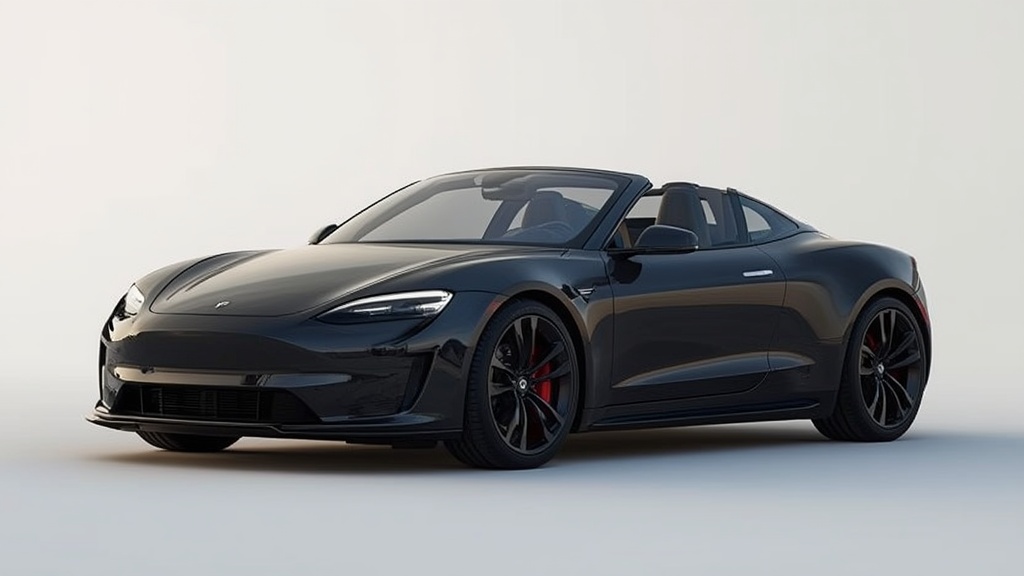
After roughly a decade of waiting since the prototype first appeared, Tesla has set October 1 as the debut date for the second-generation Roadster. The event is at the SpaceX test site in Texas, which is a choice that does some communicating on its own. I'll reserve judgment until the car actually rolls out.
But while that date approaches, Tesla filed a patent with the USPTO for an active aerodynamic wing system, and it's worth understanding what it actually describes.
What the Wing Actually Does
The system sits flush with the bodywork when it's not deployed. That's the starting point. A lot of sports cars wear a fixed rear wing that looks dramatic in a parking lot and does something aerodynamically useful at track speeds. This is different. The Tesla patent describes a wing that can extend to generate maximum downforce when needed, pivot to reduce drag at speed, and retract entirely if the car predicts a collision is coming.
That last behavior is the part I keep coming back to. The wing integrates with Tesla's automated driver-assist software. So the car can make a call to pull the wing in based on what it senses ahead. Whether that's about protecting the wing from impact damage or changing the aerodynamic profile during emergency braking, the patent doesn't make entirely clear. But it's a meaningfully different approach than a fixed piece of carbon fiber bolted to the bodywork.
The Rest of the Package
The Roadster is projected to use a targa roof layout. Combined with a wing designed to disappear into the car's body when not active, Tesla seems to be aiming for something that reads as clean and unobtrusive at low speed and transforms when you're actually pushing it.
And then there's the SpaceX package rumor, which has been floating around for a while now. The concept supposedly includes compressed-gas thrusters built into the car somehow. I don't know what to do with that information yet. It could be a real engineering direction. It could be a concept that quietly disappears from the spec sheet before production. The Texas SpaceX site as debut location at least suggests Tesla isn't trying to distance itself from the association.
What October 1 Should Answer
The debut at the SpaceX test site is the kind of setting choice that either pays off with something genuinely surprising or feels like theater in retrospect. There's no neutral version of that location. Tesla picked it for a reason.
What I actually want out of October 1 isn't the spectacle. It's whether the SpaceX package is a production option or a concept, what the final pricing looks like for buyers who aren't in the original reservation queue, and whether the active wing makes it through to the production car or gets value-engineered out.
The patent describes real engineering. A wing that retracts on collision prediction and integrates with driver-assist software is more sophisticated than most active aerodynamics you see in production vehicles. Whether that carries into what actually ships is the question a decade of waiting hasn't answered yet. October 1 might.
Source: Caranddriver