Two New Tesla Safety Features: Emergency Drive Away and Automatic Collision Evasion
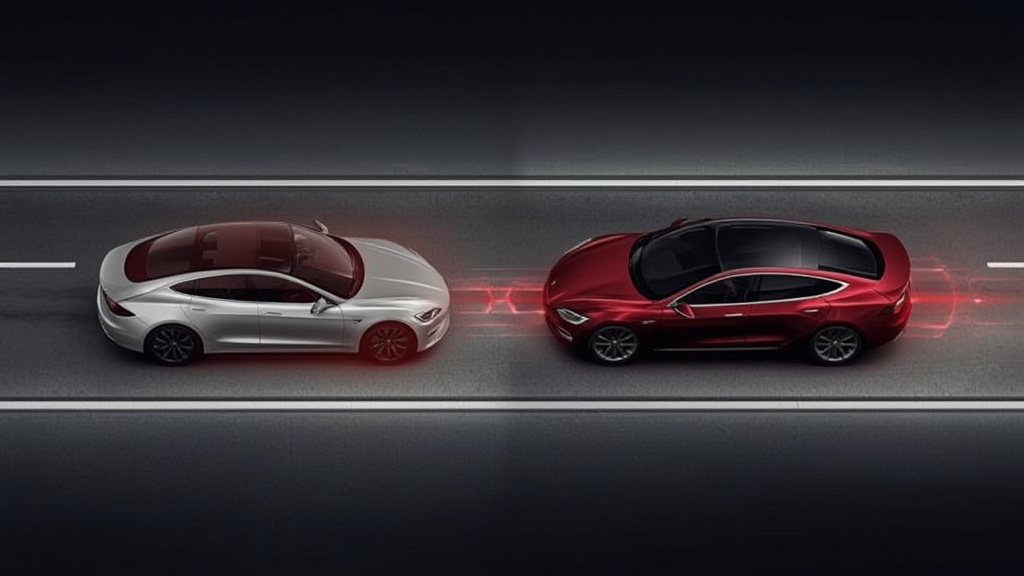
Two updates have rolled out recently that I think are worth understanding properly, because both involve situations you'd rather not be in but will appreciate having planned for. One lets you pull away from a Supercharger with the cable still attached. The other can steer your car around a collision while you're not paying attention. Neither is something I want to test personally.
Emergency Drive Away: Yes, It Damages Things
Software update 2026.38.3 brings Emergency Drive Away, and the key thing to understand upfront is that using it will damage both your vehicle and the Supercharger. Tesla is shipping this anyway, which tells you exactly what it's designed for: genuine emergencies where sitting still is worse than eating some hardware damage.
The feature lets you shift into Drive and pull away while the charging cable is still connected. No new stall hardware required. It works at every U.S. Supercharger right now (Canada and other markets aren't included at launch). And it's broadly compatible with the current fleet, with one exception: Model S and Model X vehicles built before 2021 don't support it.
There's one more detail worth knowing before you file this away mentally. When you use Emergency Drive Away, Tesla receives short camera recordings from the incident. Presumably for understanding what actually happened. If there's a genuine emergency, that's a fine tradeoff. But it's worth knowing the data goes somewhere.
In practice, this is aimed at scenarios like a medical emergency, a fire, or a threat where waiting for a graceful disconnect isn't safe. The damage consideration will stop casual misuse pretty effectively. Nobody's yanking a cable to save 30 seconds when they know they're paying for it.
Automatic Collision Evasion: HW4 Only, Conditions Apply
The other notable update is Automatic Collision Evasion, which has been rolling out in waves since software update 2026.27.6 first shipped it with FSD v14.3.9. Update 2026.27.10 (rolling out from September 19, 2026) carries FSD v14.3.10 with improvements, and 2026.27.11 is now going to another wave of vehicles.
But there's a hard line here: this only runs on HW4 vehicles. If you're on HW3, you're getting FSD v14.2 Lite in these same updates, and that version doesn't include Automatic Collision Evasion. That's a meaningful gap, and it won't close without a hardware upgrade.
For HW4 owners with an active FSD purchase or subscription, both FSD (Supervised) and Automatic Emergency Braking need to be enabled. When those conditions are met, the system can activate FSD to steer, brake, or accelerate around an imminent frontal collision that braking alone might not prevent. The trigger is specific: highways below 85 mph, no pedestrians or cyclists detected, no slippery road surface.
There's also a second trigger for when the driver appears inattentive, or has accidentally switched off FSD. That second one is actually the scenario I find more interesting. Accidentally disabling FSD and having the car recognize you're not ready to take over is a useful failsafe that doesn't get enough attention.
The handoff behavior is worth understanding too. When Automatic Collision Evasion activates, the accelerator is muted, and light brake input won't cancel the maneuver. Firm, deliberate steering force is required to take back control. That's the right call, since a startled tap on the brake shouldn't abort an active evasion.
FSD v15 Is Next
Tesla AI lead Ashok Elluswamy has said FSD v15 is planned to bring earlier hazard prediction, faster reaction time, and better collision avoidance. Earlier prediction is the right lever here. At highway speeds, the evasion window is short, and buying even a fraction of a second earlier in the response chain matters more than improving the maneuver itself.
The Short Version
If you're on HW3: Automatic Collision Evasion isn't coming to you, at least not yet. If you're on HW4 with FSD active, 2026.27.10 is worth checking for. For Emergency Drive Away, look for 2026.38.3 and know that it exists for genuine emergencies, not impatience at a busy Supercharger.
Both features are the kind of thing you build and hope nobody ever needs. But if someone does need them, they'll matter a lot in that moment.
Source: Teslarati