Cybercab Production Is Ramping. Federal Rules Say Not So Fast.
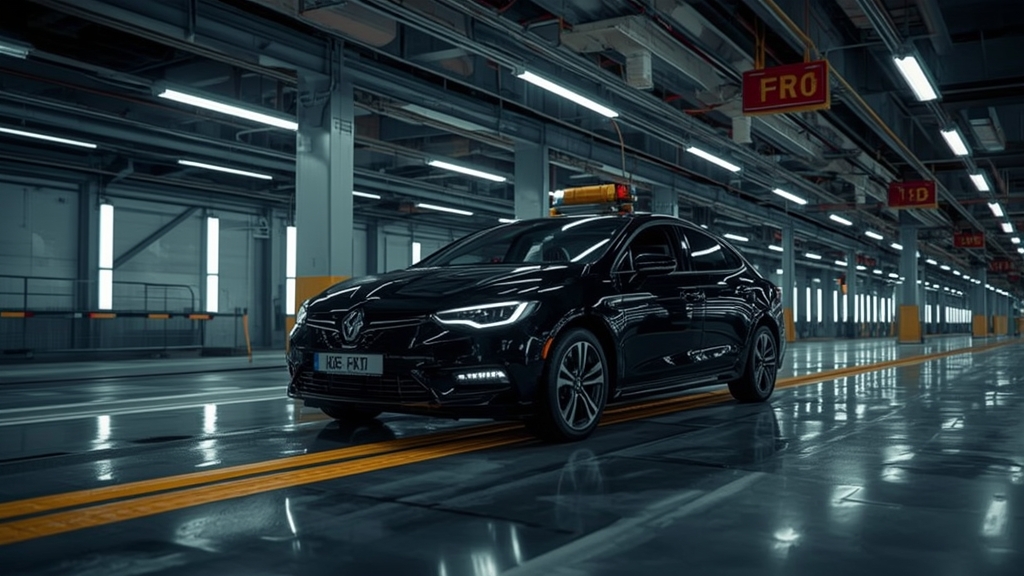
Drone footage from April 17 shows approximately 14 freshly built Cybercabs sitting in the outbound lot at Giga Texas, each missing a steering wheel, side mirrors, and pedals. That might sound like a small number. But context matters here: on April 13, footage showed over 50 units on the campus. Tesla went from first unit off the line on February 17 to dozens visible outside in about two months. That's not nothing.
What's Actually Sitting in That Lot
These aren't prototypes. The no-steering-wheel, no-mirrors, no-pedals configuration isn't a work-in-progress. It's the product. Tesla unveiled this minimalist interior at the "We Robot" event in October 2024, and what's rolling out of the factory now matches that vision. The Cybercab was always designed to be a vehicle that removes the human driver entirely, and that's what they're building.
Public road testing has already expanded to five states: California, Texas, New York, Illinois, and Massachusetts. The robotaxi service runs without safety drivers in Austin. So when people ask whether this is vaporware, the honest answer is no. The cars exist, they're being tested on public roads, and the factory is producing them.
The Federal Ceiling Problem
Here's where things get complicated. Federal Motor Vehicle Safety Standards cap vehicles without steering wheels at 2,500 units per year unless the manufacturer gets an exemption. Tesla has the production intent (Musk has described a manufacturing cycle time target of one unit every ten seconds at full scale), but federal regulations will throttle the actual ramp hard until an exemption is in place.
That 2,500 unit cap is the number to watch. It's not a technical limit. It's a regulatory one, and it affects how quickly Tesla can actually deploy Cybercabs at meaningful scale. The expansion to seven new cities in H1 2026 (Dallas, Houston, Phoenix, Miami, Orlando, Tampa, Las Vegas) makes sense in the context of a limited initial fleet. You can run a meaningful robotaxi pilot with a few hundred vehicles per city. But selling these to consumers at volume? That requires the exemption.
The Under $30,000 Question
Tesla's stated consumer price target is under $30,000. And owners would be able to add their Cybercab to the Tesla robotaxi network when they're not using it personally. The math on that proposition depends entirely on how much the network pays per mile and how often the car actually finds rides, neither of which Tesla has given specifics on.
But the price point itself is genuinely notable. At under $30,000, the Cybercab undercuts the base Model 3 significantly. One possibility is that the no-steering-wheel, no-mirrors design actually strips enough cost out of the vehicle to make that price workable at scale. Another possibility is that Tesla is pricing for robotaxi revenue, not margin on the hardware sale. Probably some of both.
Where This Is Headed
The Model X Signature Edition (100 units, $159,420, already sold out as of April 16) represents the other end of what Tesla is doing right now. While that vehicle heads to collectors, Tesla is simultaneously winding down regular Model S and Model X production to repurpose Fremont factory lines for Optimus. The Cybercab is ramping at Giga Texas. These aren't unrelated moves. Tesla is repositioning what its factories produce, and the consumer vehicle lineup is getting leaner as robotics and autonomy get more floor space.
The 14 Cybercabs in that outbound lot on April 17 are a real milestone. They're also a reminder that production starting doesn't mean production scaling, and regulatory reality doesn't care about Musk's cycle time targets. The next number to watch isn't how many are in the lot. It's whether and when NHTSA grants the exemption that lets this actually ship in volume.
Source: Teslarati