FSD 14.3.9 Can Step In to Avoid a Crash. Here's What That Actually Means.
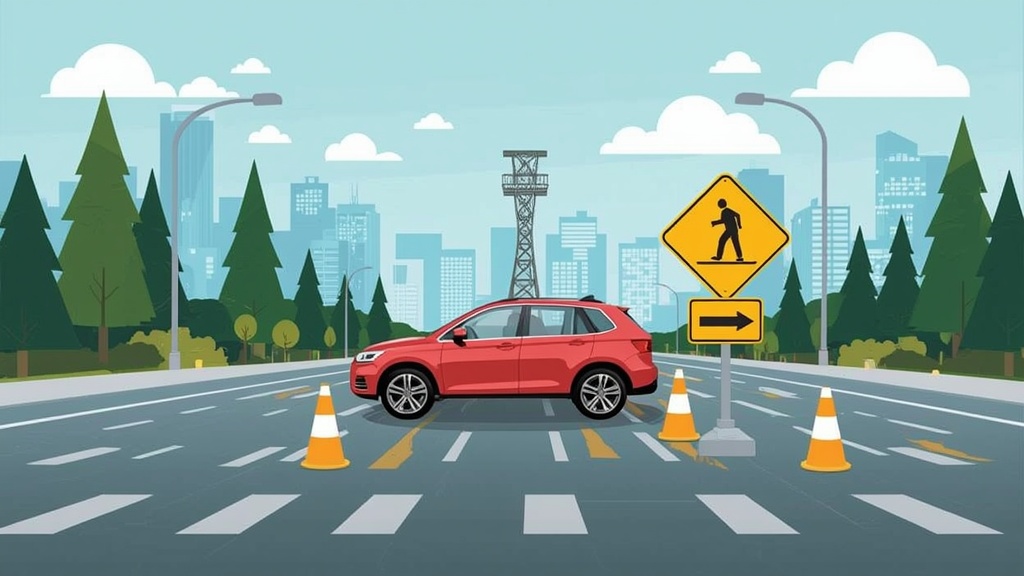
Tesla started rolling out Full Self-Driving Supervised v14.3.9 on September 4, 2026. One feature in this update is worth actually paying attention to: the system can now activate itself to avoid an imminent collision, even if you weren't using FSD when things went sideways.
What the Emergency Maneuver Feature Does
Standard Automatic Emergency Braking does one thing: brake in a straight line. That's it. FSD v14.3.9 changes the calculus by combining steering, braking, and acceleration together to evade collisions. It can change lanes or move toward a shoulder when conditions allow. That's a meaningfully different approach than "hit the brakes and hope."
The system triggers in two scenarios. First, if it detects an imminent collision where AEB alone might not be enough. Second, if the cabin camera catches the driver not paying attention or accidentally disengaging FSD. After a maneuver, the car alerts you and asks you to take back control. Which seems like the right way to handle it.
And honestly, the multi-axis evasion part is what matters. Real-world crashes often involve situations where braking alone makes things worse. A rear collision at speed on a highway might be better handled by also steering. Whether FSD 14.3.9 actually executes that correctly in practice is a question I'd want a few thousand miles of data to answer before forming a strong opinion.
The Catch
This feature requires an active FSD purchase or subscription. If you're running a Tesla without FSD, you don't get it. You still have standard AEB, which is better than nothing, but the emergency lane-change capability stays behind the paywall.
That's a reasonable business decision (Tesla isn't obligated to give away features), but it's worth knowing if you've been on the fence about FSD. The emergency maneuver system is now part of what you're paying for.
Context: Where This Fits
The same week 14.3.9 went out, Tesla launched commercial Cybercab service in Austin on September 3, adding 45 units to the fleet. The unsupervised Robotaxi service runs 6 a.m. to 10 p.m., seven days a week across Austin, Dallas, Houston, Miami, Orlando, and Tampa. By July 2026, the fleet had logged more than 380,000 miles.
FSD v15, the next architecture step, is already partially running on that Robotaxi fleet. Tesla describes it as having roughly ten times more parameters than earlier builds, with seven parallel improvement tracks, and about 40 percent of the planned gains already in place. Tesla AI lead Ashok Elluswamy said 24-hour Robotaxi service would arrive within "next month or so" once the next v15 components are ready.
But NHTSA also opened an Audit Query into the Cybercab's Federal Motor Vehicle Safety Standards certification on September 4, the day after launch. The Cybercab has no steering wheel, brake pedal, gas pedal, or mirrors, and Tesla self-certified its FMVSS compliance. NHTSA apparently wants to look at that more carefully. Whether that audit goes anywhere is genuinely unclear right now.
The Bottom Line
For current FSD subscribers, v14.3.9's emergency maneuver capability is the most practically useful update in a while. The shift from "brake in a straight line" to "use whatever the car has to avoid the collision" reflects how FSD's underlying capability is maturing. That's worth tracking.
For everyone else, the Cybercab launch and v15 progress are interesting signals. The NHTSA audit is the thing I'd watch. Self-certification of a vehicle with no driver controls is a novel situation, and how regulators respond to it will shape how quickly any of this spreads.
Source: Teslarati