Is Tesla FSD at an Inflection Point? One Analyst Thinks So
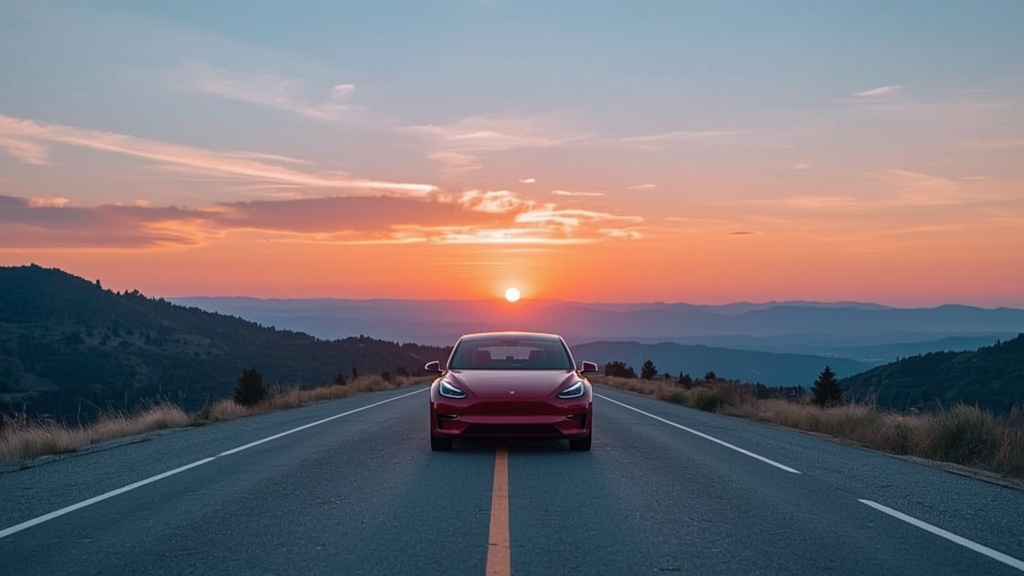
Pierre Ferragu at New Street Research described Tesla's Full Self-Driving suite as approaching an "inflection point" this month. His timeline: two more quarters before the impact becomes clearly visible. I've heard FSD hype before, so I'm not updating my priors all the way. But the framing he used is actually worth sitting with.
The iPhone Comparison
Ferragu compared FSD to the iPhone. Not in a hype sense, but structurally: the iPhone wasn't just a phone. It reframed what a phone could be and what it was worth paying for. His argument is that FSD does the same thing for a car. If autonomous driving actually works at scale, the vehicle stops being transportation and becomes something else. The value proposition changes entirely.
That's still a big if. But it's the right question to ask.
The Math on $100 a Month
The average new vehicle transaction price is above $49,000, according to Kelley Blue Book. A Model 3 starts at $35,000. That's a $14,000 spread before you've weighed anything else.
Add FSD at $100 a month and you're at $36,200 in effective year-one cost for a Model 3 with full autonomy capability included. Still well under the average car. The honest question is whether FSD earns that $100 a month at its current level. For most owners right now, the answer is probably no. Ferragu's point is that answer may change in the next six months, and once it does, that math looks very different.
Tesla's Pattern of Playing Long
In 2014, Tesla open-sourced its entire patent portfolio. Most companies don't do that. Then Tesla opened its Supercharger network to other EV manufacturers, converting what had been an exclusive competitive advantage into shared infrastructure.
Both decisions looked strange at the time. Both made more sense if you assumed Tesla was building toward something that justified the short-term cost. The FSD investment follows the same pattern. You don't spend years and that kind of capital on autonomous driving if you're optimizing for quarterly margins. You do it if you think you're building toward something that gets compared to the iPhone.
Ferragu's "two quarters" framing fits that arc. It's not "FSD is ready." It's "we're close enough that the trajectory will stop being ambiguous."
What I'm Actually Watching
Analyst calls are signals, not conclusions. Two quarters from now is early 2027. If FSD gets to where a meaningful share of Tesla owners are genuinely using it hands-off for daily commutes, the value proposition argument makes itself. If it's still "impressive demo, not quite there," we'll have another conversation.
Mark the calendar. Early 2027 is when Ferragu thinks it gets obvious. That's specific enough to hold him to.
Source: Teslarati