Tesla Adds a Virtual Queue to Superchargers, Plus Free Charging for Model 3 Buyers
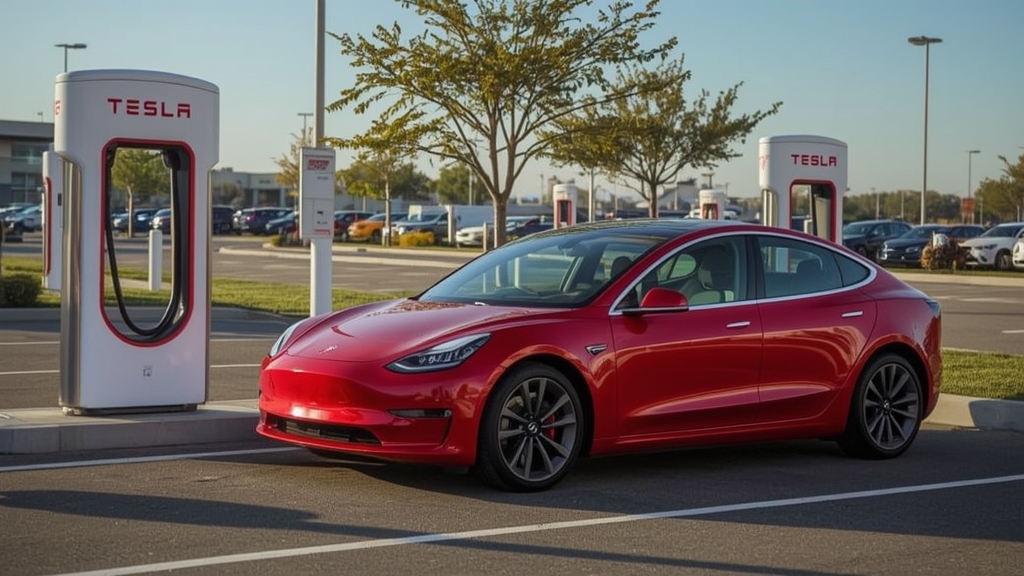
Two Supercharger updates landed this week, and one of them is actually something I've wanted for a while. Tesla is rolling out a Virtual Queue system for busy Supercharger locations, and separately, they're offering a year of free Supercharging on certain Model 3 orders. Different things, different audiences, both worth paying attention to.
The Virtual Queue: Finally
Anyone who's pulled into a packed Supercharger and had to circle the lot waiting for a stall knows how annoying this gets. Tesla's answer is a Virtual Queue. The system uses your location via the Tesla app to determine when you're eligible to join. Once you're in, the app shows your position and how many vehicles are ahead of you.
You don't physically park and wait. You wait nearby, and the app tells you when it's your turn.
The concept is right. The worst Supercharger experiences I've had weren't about charger speed. They were about the awkward social dynamics of waiting for a stall when there's no system for it. People hovering, blocking traffic, not knowing who's "next." A queue fixes that. Whether the execution is smooth depends on how tight the location detection is. If it kicks you out of the queue when you leave to grab coffee, that's going to need some tuning.
But as a direction, this is clearly the right one.
Free Supercharging on Model 3 Long Range and Performance
Tesla North America is offering one year of free Supercharging on Model 3 Long Range and Performance variants ordered on or after April 24, 2026. The base Rear-Wheel Drive trim doesn't qualify.
At current Supercharging rates (roughly $0.40 to $0.50 per kWh), a typical Model 3 owner could avoid somewhere between $800 and $1,200 in charging costs over that year. That's real money. Not a gimmick number.
And for what it's worth, Tesla owners already get the lowest Supercharging rates on the network. Non-Tesla EVs pay approximately 40% more per kWh, or they need a subscription. So the baseline is already favorable before "free" enters the picture.
The obvious read is that Tesla needs to move order volume on the higher trims. That's almost certainly true. But incentives that save you $1,000 in real expenses are worth taking at face value rather than dismissing just because the math works for Tesla too.
Meanwhile, Cybercab Production Has Started
Separate from the Supercharger news: Tesla has officially started mass production of the Cybercab at Giga Texas. VIN Zero is out, finished in champagne gold with a high-gloss exterior.
The specs, in case you haven't been following: two-door, two-passenger coupe with no steering wheel and no pedals. Vision-only Full Self-Driving powered by multiple cameras and AI. 35 kWh battery, 5.5 miles per kWh efficiency, estimated 200-mile range. Inductive charging (no port), and a large display screen as the primary passenger interface.
Tesla is targeting hundreds of units per week as production ramps. That's not a lot in automotive terms, but it's how these ramps start.
The Cybercab connects back to the charging question in an interesting way. A vehicle built entirely around autonomy presumably needs to charge itself. Inductive charging makes sense for a car with no driver to plug it in. The Virtual Queue and a network of autonomous vehicles start to look like they belong to the same long-term infrastructure plan, whether or not that plan is fully formed yet.
What This Week Adds Up To
None of these are "everything changes tomorrow" announcements. The Virtual Queue is a quality-of-life fix for a real frustration. The free Supercharging is a sales incentive with genuine dollar value. The Cybercab is early-stage production of something that won't affect most current Tesla owners for years.
But it's a lot of charging-adjacent news in a short window. And it suggests Tesla is thinking about the charging experience as a system rather than just a hardware spec. That's probably the right way to think about it. Whether the execution follows through is a different question.
Source: Teslarati