Tesla Robotaxi Hits Miami, Making Florida the Third State
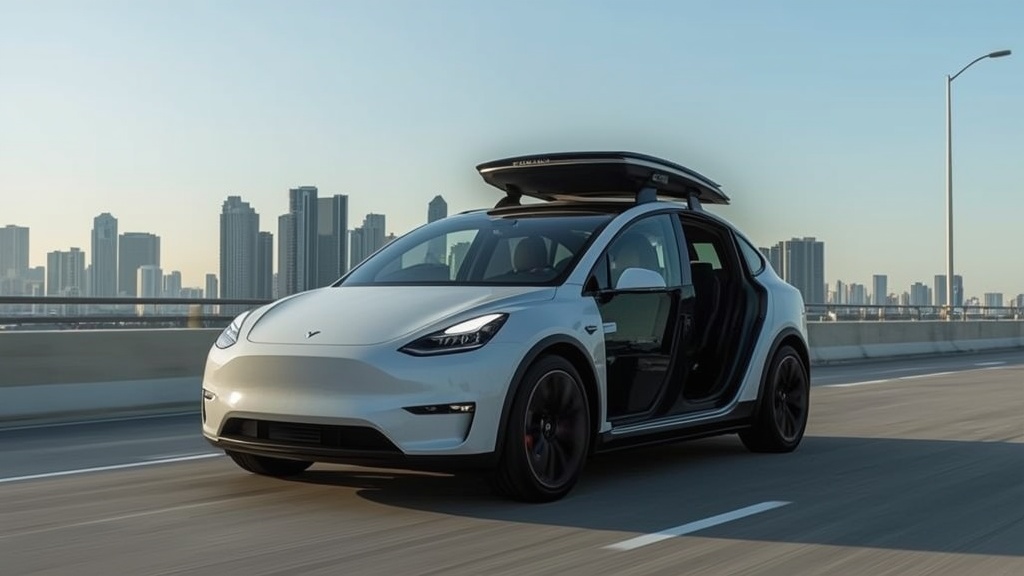
Tesla's Robotaxi program just landed in Miami, which makes Florida the third state to get autonomous ride-hailing service. The launch covers a geofence of approximately 10 to 14 square miles in western and central Miami, including Miami International Airport. That last part is notable. Airport coverage on day one suggests Tesla is serious about making this actually useful rather than just demonstrating the technology exists.
What's Actually Covered
The Miami geofence includes SR 826 (Palmetto Expressway), US 41 (Tamiami Trail), and a handful of connectors: SR 968, 953, 959, and 972. If you know Miami at all, those are the kinds of roads that make local drivers miserable on a good day. Heavy traffic, complex interchanges, lanes that disappear without warning. Either Tesla has enough confidence in the system to throw it into that environment immediately, or the geofencing is carefully designed to keep vehicles on the more predictable stretches. Probably some of both.
Western and central Miami is a reasonable starting zone. It's not downtown Miami Beach or the causeway traffic, but it's not a quiet suburb either. Real urban driving with real complexity.
How We Got Here
The rollout timeline tells the actual story. Austin launched on June 22, 2025 with limited commercial operations. The Bay Area followed in late July 2025, covering San Francisco, San Jose, and Berkeley (which is a genuinely harder environment than Austin in most respects). Austin reached full commercial service by November 18, 2025.
Then Dallas and Houston came on April 18, 2026. And now Miami.
That's six active locations as of early July 2026: Austin, Dallas, Houston, San Antonio, the Bay Area, and Miami. The pace has accelerated noticeably. From Austin-only in mid-2025 to six markets by mid-2026 is a different kind of expansion than we've seen from any other autonomous program. Whether that pace is sustainable, or whether it's going to create problems somewhere down the line, is worth watching.
The Florida Angle
Florida as the third state makes geographic sense. It's a large EV market, the regulatory environment has been accommodating for autonomous vehicle testing, and Miami specifically has the kind of density that makes ride-hailing economically viable. The airport inclusion on day one of the geofence is either smart (high-demand, predictable routing) or bold (unfamiliar passengers, time pressure, heavy vehicle traffic around terminals). Probably smart.
One thing I'd want to know that the current facts don't answer: whether Miami adds San Antonio-style expansion soon (San Antonio is already listed as active in Texas alongside Austin, Dallas, and Houston), or whether Florida follows a slower build-out pattern. The Texas expansion moved pretty fast once Austin proved out. That could be the model for Florida.
Where This Is Going
Six markets in roughly 13 months of commercial operation. The Austin-to-everywhere pattern suggests Tesla is treating each new city as an expansion of the same underlying system rather than a fresh deployment. But Miami is legitimately different terrain from Austin or even the Bay Area, both in road design and in the kind of driving culture locals expect from other drivers around them. The system is going to encounter things in Miami that it hasn't seen elsewhere.
And that's kind of the point. You don't build a robust autonomous driving system by staying in friendly conditions. The airport coverage alone means the system needs to handle Uber and Lyft drivers doing illegal U-turns, rental car shuttles stopping everywhere, and arriving passengers who have no idea where they're going. That's a harder test than most of what Austin offered in those early months.
Whether Miami becomes the third city with full commercial service (the way Austin grew into) or stays in a limited-launch mode for a while is the question worth checking back on in a few months.
Source: Teslarati