Tesla's Active Suspension Patent Pulls Wheels Up Before You Hit Bottom
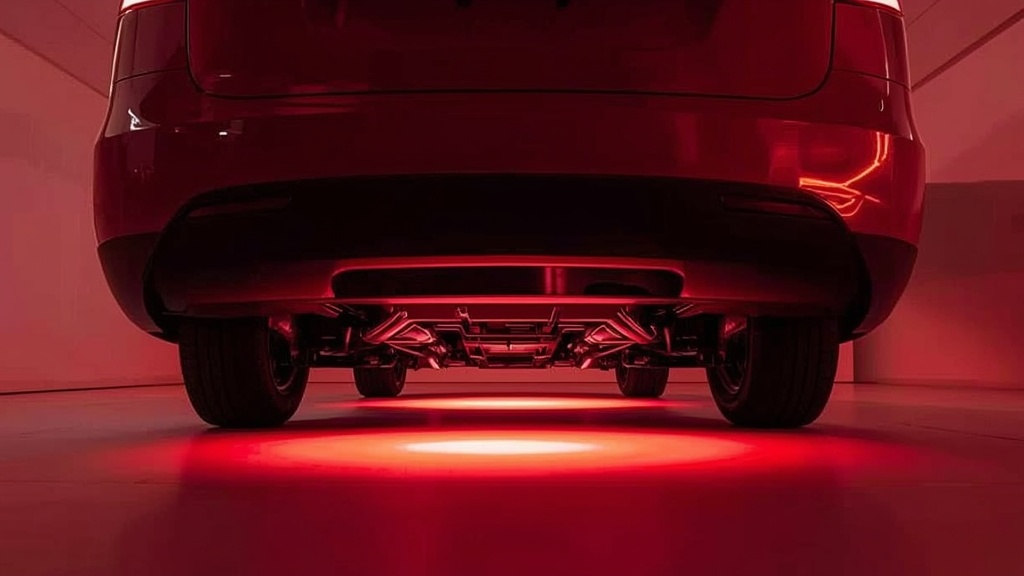
Tesla filed a patent (US12654505B2) for an active suspension system that does something I've been waiting for someone to engineer properly: instead of absorbing a pothole impact after it happens, it tries to get the wheel out of the way before the car drops into it. Three Tesla engineers, Brian Lee Doorlag, Avraham Kagan, and Justin Sill, are credited on the filing, titled "Suspension Actuator System for a Vehicle."
The mechanical approach is more interesting than the description makes it sound.
How the Hybrid Design Works
The patent describes a hybrid design, meaning it combines active motor-driven control with passive elements rather than going fully active. That distinction matters for practicality. Fully active suspensions work, but they're power-hungry and mechanically demanding. This design tries to get the best of both approaches.
The active part uses an electric motor driving a belt connected to a ball nut assembly and threaded screw. That mechanism adjusts the length of the suspension strut in real time. So the motor is literally extending or retracting the strut as conditions change.
But the clever part is what's in parallel and in series with that actuator. A low-rate air spring mounts in parallel with the motor assembly. Its job is to carry the static weight of the car, which means the motor doesn't have to work against gravity constantly. It only handles dynamic adjustments. And between the actuator and the wheel, there's a spring and an adaptive damper (likely magnetorheological or valve-controlled for electronic tuning) to filter out high-frequency vibrations that would otherwise sneak past the active system. Accelerometers and wheel position monitors feed data to the control system.
What Actually Happens at a Pothole
Here's where it gets specific. When the system detects a pothole, it activates the motor to retract the strut and pull the wheel upward. The goal is to minimize how far the wheel drops into the hole, which reduces the impact the body experiences.
This is the opposite of how passive suspension works. Passive suspension absorbs the hit after the wheel falls. This system tries to reduce how far the wheel falls in the first place.
How fast the motor can react to a pothole detected in real time is an open question. But the filing mentions something more interesting than just reactive detection.
The Fleet Data Angle
The patent says the system can integrate with Tesla's road roughness mapping patents. Tesla already has IP around mapping road conditions using fleet data, and this suspension system could use that data to anticipate potholes before your car's sensors even see them. Your car would know a rough patch is coming because another Tesla logged it last week.
That's the part that makes reaction speed less of a concern. Preemptive adjustment based on known road conditions is a different problem than real-time reaction, and one Tesla's data infrastructure is well positioned to solve. A fleet of millions of cars mapping every road surface is a genuine advantage here.
Where This Goes Next
The patent notes this builds on the adaptive dampers and air suspension already in the Cybertruck. The filing mentions potential rollout to refreshed Cybertrucks or next-generation vehicles, which is about as specific as patents tend to get.
Patents file and then sit for years, or sometimes never ship. This could mean active suspension is coming to a future model refresh eventually, or it could mean Tesla's engineers were solving an interesting problem on paper. Hard to say which from a filing alone.
But the hybrid architecture reads like something designed to actually ship rather than just protect IP. Offloading static weight to the air spring and reserving motor effort for dynamic control, then filtering the remaining high-frequency vibration passively, is the kind of layered thinking that shows up when engineers are accounting for real-world conditions. The pieces fit together with a logic that concept patents usually lack.
Worth watching for in the next Cybertruck update cycle.
Source: Teslarati