Tesla's Wireless Charging Patent Has Real Engineering Behind It, Plus China Gets a Better Model 3
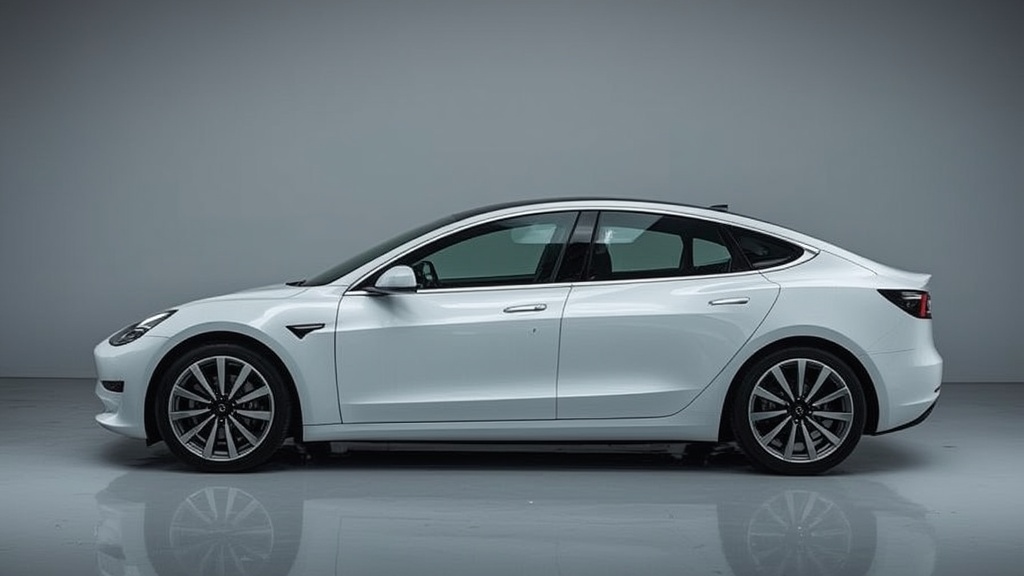
Two things came out of Tesla on October 1 worth more than a headline skim. First, a wireless charging patent with actual technical substance. Second, an updated Model 3 launched in China with a few features that US buyers will notice are missing from their own cars.
The Wireless Charging Patent: More Engineering Than Hype
Tesla published a wireless charging patent on October 1 that was originally filed back in March 2026. And before you dismiss it as another vague IP placeholder, this one has real engineering specifics.
The core problem it addresses is foreign object detection on the charging pad under varying temperatures. That sounds dry until you think through the actual failure mode: a piece of metal ends up on the pad, heats up, and there's no human around to notice. In an autonomous vehicle, that's not a hypothetical edge case. It's a design requirement.
Tesla's approach uses inductive coils in resonant tanks, excited using signals near the nominal resonant frequency. When a metal object lands on the pad, the system detects two simultaneous changes: an increase in coil resistance and a decrease in coil inductance. Both together confirm a metallic foreign object. The temperature compensation piece matters because coil behavior shifts with heat. A detection system that works at room temperature but fails in summer doesn't actually solve the problem.
The stated application is Cybercab and Robotaxi. Tesla claims wireless charging efficiency "well above 90%" for Cybercab. The business logic is straightforward: a fully autonomous fleet can't depend on someone physically connecting a cable. Reliable wireless charging with real safety systems isn't a luxury feature for Cybercab, it's prerequisite infrastructure.
This could mean Tesla is further along on Cybercab's charging implementation than public timelines suggest. Or it's responsible IP hygiene before announcing anything. Either way, the foreign object detection work is engineering, not a concept slide.
China Gets a Better Model 3. The US Doesn't. Yet.
Tesla launched an updated Model 3 in China on October 1, and a few details stand out for anyone following the US spec.
The new Chinese Model 3 has a 16-inch front touchscreen. The US version is 15.4 inches. That's 0.6 inches, which doesn't sound like much until you're looking at it every day. Tesla has reportedly started installing larger screens in some US-built vehicles already, but the official US spec hasn't moved.
The more practically interesting addition is V2L, vehicle-to-load capability. You can now run external devices off the car's battery. Camping, job sites, power outages. The US Model 3 doesn't have this. The US Model Y doesn't have it either. It's the kind of feature that feels like a minor spec-sheet checkbox until you actually need it.
On the interior: black headliner is now standard across all China Model 3 trims. (The US Model Y already ships with a black headliner, and Tesla has been quietly adding them to some US Model 3 production runs as well.) White interior is discontinued on Premium and Performance trims, replaced by Zen Grey. The 19-inch Dark Nova Wheels are standard on the Premium trim specifically.
Pricing in China: RWD at 235,500 yuan (~$35,000), Long Range RWD at 259,500 yuan (~$38,700), Long Range AWD at 285,500 yuan (~$42,600), and Performance at 339,500 yuan (~$50,600). These specs also apply to Australia and New Zealand, which are served by Giga Shanghai.
The US-China gap is the real story. A larger screen and V2L are features that make sense on a Model 3 anywhere, and China is getting them first. One possibility is that a formal US spec update follows once the larger screen is fully rolled out across US production. The fact that it's already appearing in some US-built vehicles suggests the hardware is ready. Whether Tesla formalizes it here this year is worth tracking.
Neither Is a Big Announcement. Both Matter.
A patent filing and a regional refresh don't get the headlines a new model reveal gets. But this is the kind of incremental movement that actually affects what's in your driveway. Wireless charging with real safety engineering is foundational to any serious autonomous fleet. And a Model 3 with V2L and a 16-inch screen is a meaningfully better car, even if the upgrade is measured in fractions of an inch.
The China features landing first is a pattern Tesla has run before. Whether the US timeline follows quickly this time is the question worth watching.
Source: Teslarati