WattEV Ordered 370 Tesla Semis. California's Largest Electric Truck Order Ever.
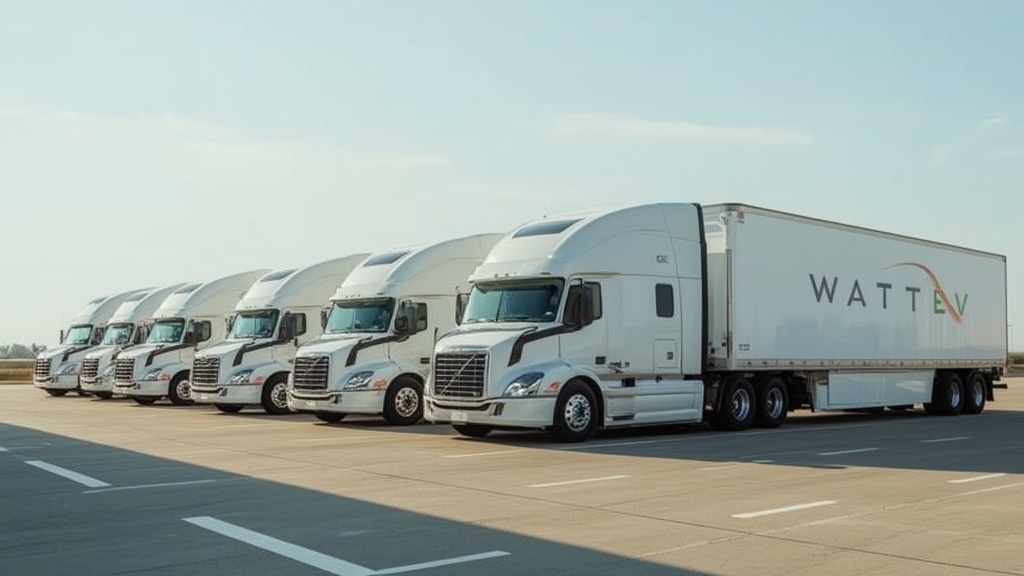
370 Tesla Semis. $100 million. California's largest single electric truck order on record. WattEV placed that order, and my first reaction was: these are not people guessing. WattEV has been running Tesla Semis at the Ports of Long Beach and Los Angeles for a while now, logging millions of electric miles in Southern California. They know exactly what they're buying.
What 370 Semis Actually Means
More than 300 of those 370 trucks are earmarked for a joint program with the Port of Oakland, handling drayage and regional freight. Drayage is the short-haul work that moves containers between the port and nearby warehouses or rail yards. It's high-cycle, predictable-route work, which is exactly where electric makes the most economic sense. No one is putting a Tesla Semi on a 1,200-mile overnight run and hoping for the best.
First 50 units are scheduled for delivery in 2026. Full fleet operational by end of 2027. That lines up with Tesla ramping Semi production at its Nevada factory targeting higher volumes this year. The schedule is tight but it's not imaginary.
The Charging Problem, Actually Being Solved
New Megawatt Charging System hubs are going up in Oakland, Fresno, Stockton, and Sacramento specifically for this fleet. MCS delivers up to 300 miles of range in about 30 minutes, which is workable if you're running planned freight routes with predictable dwell times at distribution centers.
The charging infrastructure story for Semi has always been the weak point. But WattEV isn't waiting for a public network to materialize. They're building it themselves, for specific trucks on specific routes. That's the only approach that actually works right now, and it's what serious operators do.
A Few Other Things From This Week
Software update 2026.14, part of the Spring Update, added European cab-over semi-truck 3D models to the FSD visualization for European owners. No FSD subscription required. The assets were actually baked into the software back in October 2025 alongside about 15 other new visuals, but Tesla held the feature until fleet data confirmed the AI was reliably detecting those trucks. Six-month delay to verify it actually works before shipping it. I find that approach reasonable, even if it's not the most exciting announcement.
Tesla also added a battery repair certification feature to the app. When a major HV battery repair or replacement is done on a Model 3, Model Y, Model S, or Model X, the vehicle now generates an official 'Certification of Repaired HV Battery' that's permanently stored in the Service History tab and downloadable as a PDF. For anyone buying used, this is genuinely useful. Battery warranties cover 8 years and 100,000 or 120,000 miles depending on the model, and having that documentation living in the app is cleaner than hoping the paper service records survived three owners.
Norway Showed Everyone Else What the Endgame Looks Like
Q1 2026 Norway numbers came in and they're worth a second look. EVs hit 97.9% market share. Plugin EVs at 98.6%. Out of 27,175 new vehicles registered in the quarter, petrol and hybrid combined accounted for fewer than 80 units. Plug-in hybrids collapsed to 0.7%.
Tesla Model Y was the top-selling vehicle overall in Norway for Q1 with 5,406 units. Not top-selling EV. Top-selling vehicle, full stop. Model 3 placed second at 2,010 units, Toyota bZ4X third at 1,400.
Norway has specific incentives and specific geography. I'm not suggesting the US hits 98% EV share next year. But 80 non-EV registrations in an entire quarter was unimaginable not long ago. The trajectory is real.
Back to the Semi
The WattEV order is different from most Semi news because it's concrete. An operator with real field experience, real miles logged, signing a $100 million purchase order and building the charging infrastructure to support it. That's not a pilot program announcement or a letter of intent. It's a commitment from people who already know what the trucks can do.
Tesla has been quiet about Semi sales numbers, which makes it easy to treat the program as perpetually almost-ready. Orders like this, from operators who've already proven the concept, are what actually moves the story forward.
Source: Teslarati