14 Cybercabs in the Lot: Tesla's Robotaxi Push Looks More Real by the Day
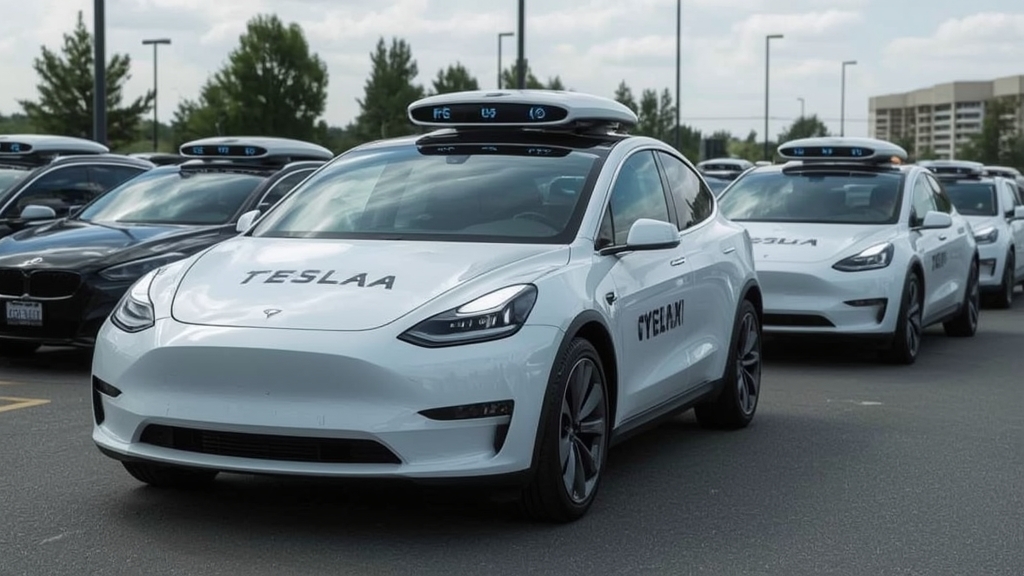
On April 17, 2026, somebody in Austin spotted 14 freshly built Cybercabs sitting in Gigafactory Texas's outbound lot. No steering wheels. No side mirrors. Minimalist interiors matching exactly what Tesla showed at the "We Robot" event in October 2024. Then, the next day, Tesla expanded unsupervised Robotaxi service to Dallas and Houston. The timing wasn't subtle.
What Was Actually in That Lot
These weren't camo'd mules or engineering test units. These were production-intent Cybercabs, purpose-built two-seaters designed for unsupervised FSD operation, sitting in the spot where finished vehicles wait before they ship. The "We Robot" reveal was compelling but still felt like a demo. Fourteen of them in an outbound lot feels different. That's inventory.
Production started in late 2025 and early 2026, initially for internal testing and regulatory compliance work. So this sighting isn't a surprise, but it's a useful data point. The line is running.
The Regulatory Cap Nobody Talks About Enough
Here's the constraint that matters most right now. Federal Motor Vehicle Safety Standards limit vehicles without steering wheels to 2,500 units per year, without an exemption. Tesla is operating well within that number while it works the regulatory side.
This means production capability probably isn't the current bottleneck. Getting a formal exemption (or a rule change) is almost certainly what determines when Cybercab scales from "carefully managed test fleet" to something that actually changes urban transportation. Fourteen units in a lot is a milestone, but it's also a reminder of how much regulatory runway is still ahead.
Four Cities Now, More on the Schedule
The April 18 expansion brings the Robotaxi footprint to four locations: Austin, the SF Bay Area, Dallas, and Houston. Dallas coverage sits near Highland Park and central neighborhoods, roughly 25 square miles. Houston covers parts of Willowbrook and Jersey Village, also about 25 square miles.
Tesla's Q4 2025 earnings guidance outlined an H1 2026 rollout across seven U.S. cities, including Phoenix, Miami, Orlando, Tampa, and Las Vegas. With four active now, more launches are presumably on the near-term schedule. Whether "H1 2026" actually means before July is one of those timeline questions Tesla has a complicated history with. But the cadence, Austin to SF Bay Area to two new cities in a week, suggests they're not sandbagging the expansion this spring.
The Software Angle
The Spring 2026 update (version 2026.14, also showing up as 2026.14.1) added a fully interactive rear passenger navigation map that works while driving. This was previously a Robotaxi-exclusive feature. It's now rolling out to Model S, Model X, Model 3, Model Y, and Cybertruck.
This is a meaningful signal. Features proving themselves on the Robotaxi fleet are migrating back to owner vehicles. That suggests the two product lines are sharing a development feedback loop, not running in parallel silos. The rear map isn't something most owners will use daily (you're usually in the driver's seat of your own car), but it's useful for road trip passengers who want to follow along without asking you to narrate every exit.
Where Things Actually Stand
A year ago, Cybercab felt like a concept with good lighting. Now there are production units in an outbound lot, a four-city service footprint, and software features moving bidirectionally between the robotaxi and owner fleets. The 2,500-unit federal cap remains the clearest structural constraint I can identify. How quickly Tesla secures an exemption, or federal rules evolve, will determine whether Cybercab scales into something meaningful or stays a carefully bounded pilot program through the end of the year.
And 25 square miles per city, in hand-picked geographies, is still a controlled experiment. The real signal will come when the seven-city H1 target is complete and we see whether the operations hold up at broader geographic coverage. The units in that Giga Texas lot suggest the production side is moving. The regulatory and operational sides are the open questions.
Source: Teslarati