From 10 Cars to 5,000: Nevada Just Gave Tesla's Robotaxi Program Real Scale
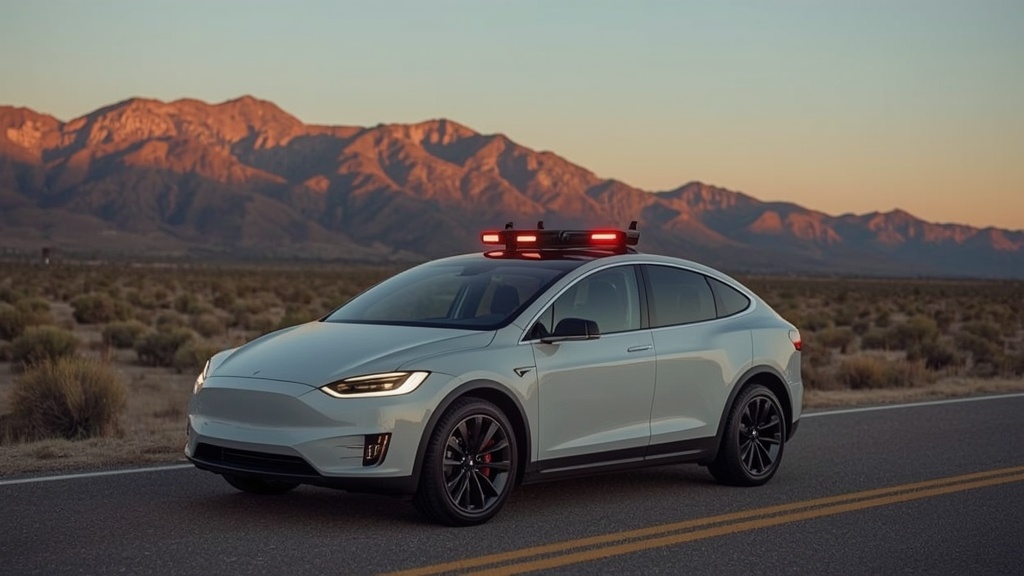
Two things happened in the Tesla world this week worth paying attention to. One is a recall affecting nearly 3 million vehicles in China. The other is a permit expansion in Nevada that takes Tesla's robotaxi program from a glorified demo to something with actual commercial legs. Let's start with Nevada.
Nevada Went From 10 Robotaxis to 5,000
The Nevada Transportation Authority approved Tesla's full Autonomous Vehicle Network Company permit on August 20, 2026. The new permit allows up to 5,000 driverless vehicles across all of Clark County over the next 12 months. Tesla can also request a statewide geofence expansion if it wants to push further.
Here's the number that matters for context: Tesla's previous Nevada authorization was 10 vehicles, restricted to a Las Vegas Strip corridor, with a 45 mph speed ceiling and no airport pickups. Ten vehicles on a strip is basically a proof-of-concept. Five thousand vehicles across Clark County is an actual business.
Commercial rides are expected to start within 30 days, pending vehicle inspections, insurance filings, and fare approval. Tesla filed the original 5,000-vehicle application back in June 2026, so this didn't come out of nowhere. The regulatory process moved faster than these things usually do.
Austin Is Also Coming Online
Tesla is preparing to open Cybercab rides to the public in Austin as soon as this month. The Cybercab is a purpose-built two-seat vehicle with no steering wheel or pedals, designed specifically for high-utilization autonomous operation. Additional form factors are reportedly coming on the same platform (Tesla mentioned the Robovan concept as an example).
One detail I found interesting: Tesla is intentionally limiting how many Model Y vehicles it adds to the robotaxi fleet, prioritizing Cybercab scaling instead. That makes sense. Model Y was designed to be someone's daily driver for 10 years. Cybercab was designed to run nearly continuously without a human operator. The wear profile, cost structure, and operational overhead are completely different. Running your consumer vehicle into the ground on a robotaxi fleet is a different calculation than purpose-built hardware made for it.
FSD V15 Is the Software Layer Underneath All of This
FSD V15 is described as a step-change in capability, comparable to the leap from V13 to V14. It covers seven core technologies. About 40% of V15 is currently being tested in the robotaxi fleet. Tesla says the existing AI and Hardware 4 stack is already capable of running V15 and supporting unsupervised operation, and they view V15 as the primary gateway to scaling unsupervised robotaxi operations nationwide.
That's the part I'd watch most closely. The Nevada permit and Austin launch are the regulatory and logistical layer. V15 is the technical foundation. If both hold, the scaling story gets a lot more credible, fast. And if V15 doesn't deliver, none of the permits matter.
Also: China Recall, 2.9 Million Vehicles
On a less headline-grabbing note, Tesla is recalling 2,975,910 vehicles in China because the emergency door release latches aren't visible enough. More than 1.9 million are Model Y, approximately 970,000 are Model 3.
The fix is about as low-impact as recalls get: warning labels added to emergency latches, free of charge. Tesla will also push an OTA update adding a post-crash window-lowering strategy.
This is partly compliance-driven. China's SAMR issued a new mandatory standard requiring all vehicle doors to have mechanical release mechanisms, effective January 1, 2027. Vehicles already on sale with type approval get a two-year transition period until January 2029. The label fix puts Tesla ahead of that requirement without a hardware change, which is the smart move when you're talking about nearly 3 million vehicles.
But yes, adding a warning label to an existing safety mechanism is about as low-stakes as recalls come. The scale of the number is what gets the headline. The actual intervention is a sticker and a software update.
The Week in Summary
If you're tracking Tesla's autonomous vehicle program, the Nevada permit expansion is the real story. Going from 10 vehicles on a strip corridor to 5,000 across Clark County, with commercial rides starting in 30 days, is a meaningful step. Austin adds a second market. FSD V15 adds the technical foundation. The China recall is a compliance item that happens to involve very large numbers.
Whether the robotaxi program actually delivers at scale is still an open question. Regulatory permits are not the same as operational success. But this week moved the story forward in a concrete, measurable way. I'll be watching Austin closely. That's the first real public test of how Cybercab performs outside a controlled pilot.
Source: Teslarati