Tesla's Long Game on FSD Might Finally Be Paying Off
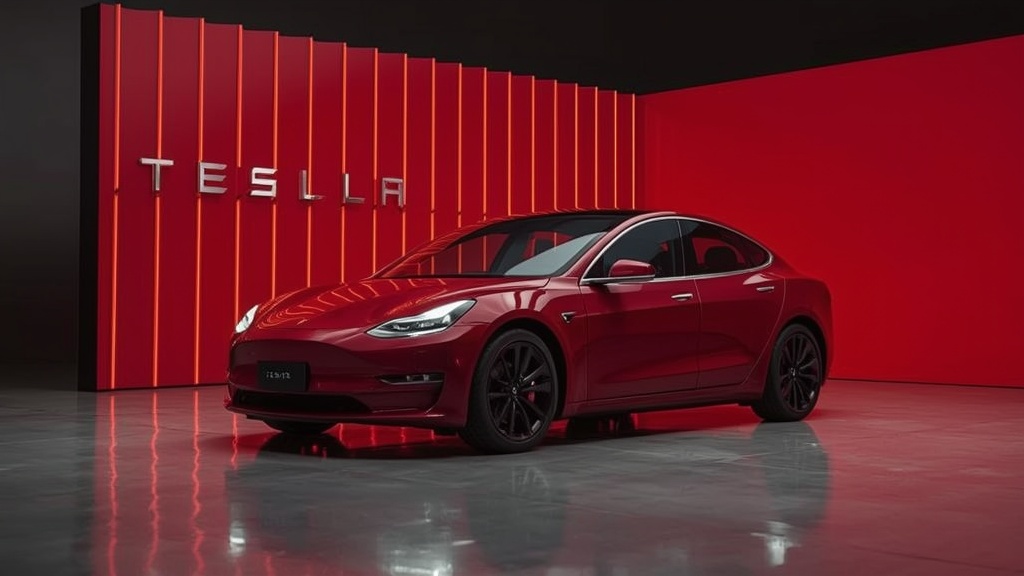
Back in 2014, Tesla did something that seemed almost counterintuitive for a company fighting to stay alive: it opened up its entire patent portfolio to the industry. The stated reason was accelerating global EV adoption. At the time it read as either genuinely altruistic or a clever PR move. Probably both. Then Tesla opened the Supercharger network to other manufacturers. Same playbook, bigger infrastructure bet.
I thought about both of those moves recently while reading analysis from Pierre Ferragu at New Street Research, who's arguing that Tesla's Full Self-Driving suite is approaching an inflection point comparable to what the iPhone did to the mobile market. His estimate is two more quarters of development before that shift hits.
The iPhone Comparison Is a Big Claim
Ferragu isn't a random blogger. New Street Research follows the tech space seriously, and the iPhone analogy is specific: not just "it'll be popular" but a genuine market-reshaping moment where the category changes around one product. That's a high bar.
But it's worth sitting with the idea instead of immediately dismissing it. The Supercharger move actually did reshape the EV charging landscape. What looked like a Tesla-specific network became shared infrastructure for the broader industry. That pattern, of Tesla doing something for competitive reasons that ends up benefiting everyone, has repeated enough times to take seriously.
The Pricing Math If FSD Delivers
Here's where it gets practically interesting. The average new vehicle transaction price crossed $49,000 as of mid-2026 (Kelley Blue Book). A Model 3 sits at around $35,000, plus a $100 monthly FSD subscription if you want it.
Run that out: $35,000 plus $1,200 a year for FSD is still $49,000 over roughly eleven years. And that's if you subscribe to FSD every month without a gap. Most people won't. So on a pure purchase-price basis, you're already $14,000 below average in a car that handles highway driving and navigates intersections.
If FSD actually hits that inflection point Ferragu is describing, the calculus shifts further. The subscription model starts looking less like an add-on fee and more like a service with real utility. That changes how people think about the $100/month.
Two Quarters Is a Specific Prediction
I'm not in the habit of trading on analyst timelines. But "two quarters" is specific enough to be falsifiable, which I respect. Ferragu isn't saying "FSD will be good eventually." He's saying mid-to-late 2026 is the window. That's a prediction with a date attached, which means we'll actually know whether he was right.
This is different from the years of vague "FSD is almost there" commentary that became background noise. Either the product delivers something meaningfully different in that window or it doesn't. My experience has been that Tesla software often moves in unexpected bursts after long stretches of incremental change. The 2014 patent move and the Supercharger opening both happened faster than the industry expected them to.
What Actually Matters
Whether or not Ferragu's timeline holds, the underlying point has legs. Tesla has spent a decade building infrastructure (patents, charging, training data, over-the-air update capability) that positions FSD differently than any competitor. Opening patents and Superchargers wasn't charity. It was building the conditions for a market where Tesla's software advantages matter more than hardware specs.
And if you're shopping for a car right now, the Model 3 at $35,000 against a $49,000 market average is the practical version of that question. Not whether FSD will hit an iPhone moment. But whether the car you're buying today will get meaningfully better through software before you're done paying it off.
That's the bet Tesla has been asking owners to make since 2014. Two more quarters, according to Ferragu, before we find out if it pays.
Source: Teslarati