Tesla's Robovan, Optimus, and Terafab Are All Connected. Here's the Full Picture.
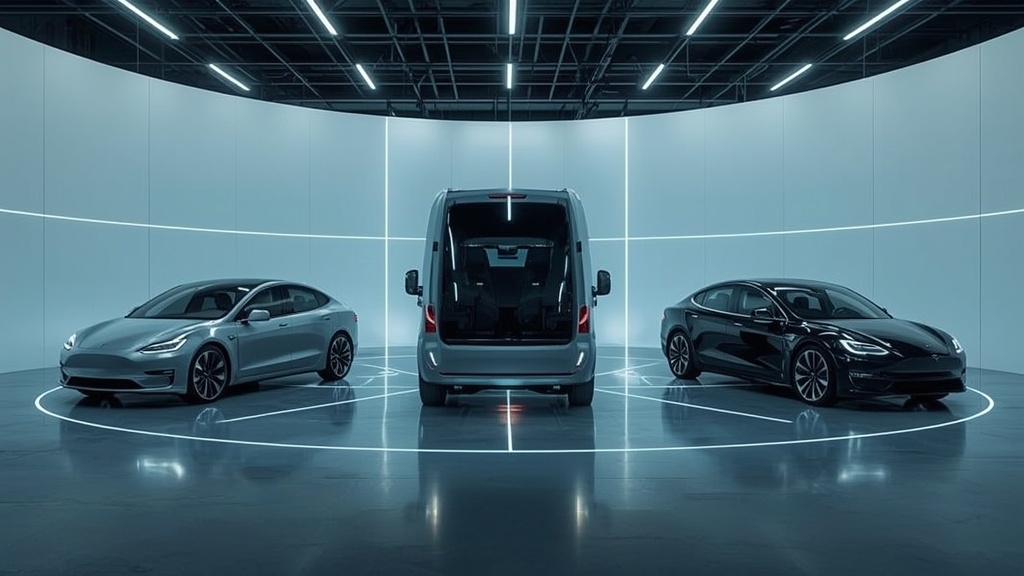
The Robovan showed up in a Terafab video recently, which is either meaningful or Tesla's marketing team thought it looked cool. Probably both. But it got me thinking about how all these pieces actually fit together, because Tesla has been quietly assembling something much larger than any single product announcement.
The Robovan Is Still a Mystery
Tesla unveiled the Robovan at the "We, Robot" event in October 2024, alongside the Cybercab. The pitch: a fully autonomous vehicle that carries up to 20 passengers, or handles freight if you swap the configuration, with a target operating cost under $1 per mile. No steering wheel, no pedals. Same basic layout as the Cybercab.
And then... nothing. As of August 2026, there's no confirmed production timeline. The Cybercab has gotten more attention, which makes sense since it's the smaller, presumably simpler vehicle to manufacture. But the Robovan hasn't disappeared either. It keeps appearing in Tesla's promotional material, which tells me it's still in the plan.
Meanwhile, Optimus Production Is Actually Moving
Here's what's more concrete: Tesla is genuinely building toward Optimus at scale. In 2026, they converted the Fremont Model S and Model X assembly line into a Gen 3 Optimus production line. Elon visited the conversion site on July 1, 2026. A second Optimus plant is going up at Giga Texas right now, targeting volume production in summer 2027 with an eventual capacity of 10 million units per year.
Ten million units per year requires some processing. The long-term price target is $20,000 to $30,000. This isn't a research project. They're converting existing factories and building new ones. That's a different category of commitment than a product reveal with nice lighting.
Terafab Is the Context That Makes This Make Sense
In March 2026, Tesla announced Terafab (a joint venture with SpaceX and xAI), planned for the Gibbons Creek site in Grimes County, Texas. The facility is roughly 2.5 miles long. The current construction phase carries a capital expenditure of $16.8 billion.
This is the frame for everything else. A 2.5-mile manufacturing complex with $16.8 billion in capex for just the current phase isn't being built to make consumer cars. This is the kind of infrastructure you build when you're planning to manufacture robots and autonomous vehicles at a scale that doesn't currently exist anywhere.
The Robovan appearing alongside Optimus in Terafab-related content isn't accidental. One possibility is that Terafab is intended, at least partly, as the production home for the Robovan. That would also explain why there's no Robovan timeline yet. Terafab has to come online first.
What This Actually Means Right Now
In the near term, probably not much for existing owners. The Cybercab is the vehicle with momentum. Optimus is the product with actual factory conversions happening. Terafab is a multi-year build. The Robovan is, for now, still a concept that passed the "real enough to put in a video" bar.
But a 20-passenger autonomous transit vehicle aimed at under $1 per mile is a fundamentally different product than anything Tesla has shipped before. It's not a consumer vehicle. It's fleet infrastructure, and fleet infrastructure requires manufacturing scale that doesn't exist yet. That's what Terafab is for.
Whether the Robovan actually gets built there remains to be seen. But I'm not writing it off. Tesla has a pattern of products that looked like vaporware right up until they weren't.
Source: Teslarati