Tesla Semi Goes High Volume: The Nevada Factory Is Real and Grok Just Showed Up in the Cabin
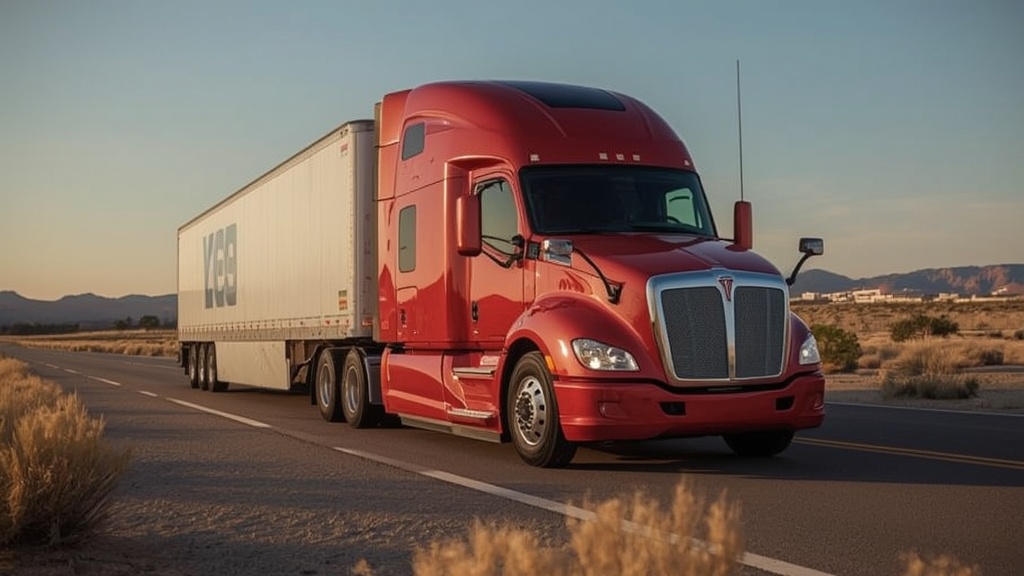
On September 24, 2026, Tesla held a Semi Handover event in Sparks, Nevada. Trucks rolled off the new dedicated Semi Factory line. Not a prototype batch. Not a staged delivery event. High-volume production, targeting 50,000 trucks per year from a 1.8 million square foot facility built right next to Gigafactory Nevada.
I've watched this program crawl forward since the original reveal. The gap between "here's a concept truck" and "here's the factory making it at scale" was long enough that plenty of people wrote the Semi off. But the factory exists, the trucks are shipping, and the details of how Tesla built this thing are worth going through.
What's Inside the Factory
The 1.8 million square feet sits adjacent to Gigafactory Nevada, which already handles battery cells, drive units, and energy products. That adjacency matters for parts flow. But the 4680 cells powering the Semi come from Giga Texas in Austin. That's more than 1,200 miles between cell production and final assembly.
Tesla's answer is full automation. The plan is zero human touch points from 4680 cell production at Giga Texas through final assembly in Nevada. To handle internal logistics at that scale, the factory uses the highest-capacity electric monorail conveyance in vehicle manufacturing. It also uses powder-coating instead of conventional paint, which cuts the solvent infrastructure and produces a more durable finish. For a commercial truck that'll accumulate hundreds of thousands of freight miles, durability beats aesthetics every time.
The 4680 Switch and What It Actually Changes
Tesla moved the Semi from 2170 cells to in-house 4680 cells. The result is lower battery mass and lower total energy, while maintaining range. For a truck competing on payload, that trade makes sense. Every pound of battery weight eliminated is a pound of cargo capacity recovered.
And the Semi shares a bar-wound stator and other components with the Cybertruck. Shared hardware across platforms is how Tesla gets unit economics to work. It's not flashy, but it's the part that actually determines whether the product is viable at scale.
Who's Actually Running These Trucks
Early customers include PepsiCo, DHL, and U.S. Foods. These are large fleet operators with predictable routes, not early adopters doing range experiments. That's the right customer profile for where the Semi is right now. High-volume ramp started after the first trucks left the new Nevada line in April 2026, so these customers have had roughly six months of real operation before the handover event. The fact that Tesla is scaling into the same customer base rather than replacing them suggests the operational data came back acceptable.
Grok Showed Up in the Cabin Too
Separate from the Semi news: Tesla integrated Grok Bot into vehicles around September 22, 2026, about five days before this was written. The Summer Update had already added voice control of cabin features through Grok. The new integration goes further. FSD handles the driving while Grok handles voice-commanded errands.
But there's a subscriber wall. Full in-vehicle Grok Bot requires a SuperGrok Heavy subscription. Connector features are open to anyone signed into Grok, but the full assistant is paywalled. This could mean the feature is incomplete for most owners until access expands, or it could be a capacity management decision while infrastructure catches up. One possibility is that Tesla bundles it into an existing subscription tier eventually. Right now it's an upsell.
The practical scenario is genuinely useful. Handling voice-commanded tasks while FSD manages the vehicle without needing to touch anything is the right direction for in-car assistants. Whether Grok executes those tasks reliably enough to become a daily habit is something owners will find out over the next few months.
A Lot Happened in One Week
A dedicated Semi factory hitting high-volume production and an AI assistant integration both going live in the same week is a dense news cycle. The Semi program took nearly a decade to get here. The Grok integration is much newer. Both represent Tesla moving from "in development" to "shipping now."
The Semi's commercial case comes down to whether 50,000 units per year is achievable at target cost, and whether the freight economics hold for operators outside the early-customer cohort. The Grok integration's case comes down to whether the subscriber requirement resolves and whether the assistant is actually worth using. Neither is proven at scale yet. But the factory is physical, the trucks are leaving it, and the software is live in the car.
Source: Teslarati