Tesla Semi Is Finally In Mass Production. Here's What the Numbers Actually Look Like.
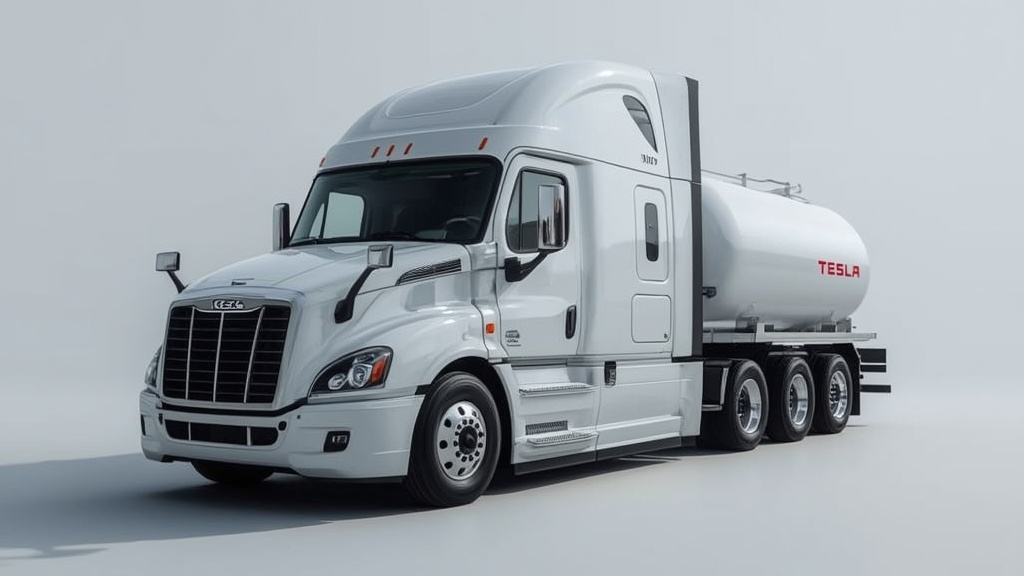
Tesla confirmed high-volume Semi production started ramping at its Nevada facility on April 29, 2026. That confirmation came from Semi Programme Director Dan Priestley, which is about as official as it gets. And it gives us a real reason to dig into what this truck actually is, because a CARB filing from the same month revealed battery specs that are more interesting than the marketing slides ever let on.
The Battery Numbers Are Enormous
The California Air Resources Board filing confirmed what the spec-sheet hadn't. The Long Range Semi carries 822 kWh of usable battery capacity. The Standard Range comes in at 548 kWh. Both use NCMA lithium-ion chemistry, a nickel-cobalt-manganese-aluminum formulation that trades some cobalt for aluminum to improve energy density and reduce cost.
For context: a typical Model 3 Long Range has somewhere around 75 kWh. The Semi Long Range is carrying roughly eleven of those. It's a massive pack, which is why charging it at any reasonable speed requires purpose-built infrastructure and why Megacharger placement matters so much for fleet planning.
Range, Charging, and the Logistics Math
Tesla rates the Long Range at 500 miles and the Standard Range at around 325 miles. Real-world energy consumption for the Long Range version comes in below 1.7 kWh per mile, which is respectable efficiency for a vehicle at 82,000 lbs GVW.
Megachargers deliver a 60% charge in approximately 30 minutes. On an 822 kWh pack, that's about 493 kWh in half an hour. The obvious intent is to fit within a federally mandated driver rest break. Whether that works in practice for a given route depends entirely on where Megacharger stations actually are, which is still the core constraint for fleet operators trying to plan around this truck.
The Price and the Operating Cost Argument
Long Range lists at approximately $290,000. Standard Range around $260,000. That's a significant premium over conventional Class 8 alternatives.
The number Tesla leads with is 15 cents per mile in operating costs. That's where the fleet argument lives. If that holds in real-world conditions, the higher upfront cost starts to pencil out over the life of a truck that's running hard miles. The "if" is doing a lot of work in that sentence. Early fleet adopters are going to be the ones who find out whether 15 cents is achievable or optimistic. The rest of the industry will be watching their data closely.
What's Actually Under the Cab
A few things in the spec sheet are worth noting. The Long Range peaks at 800 kW of motor power. Standard Range at 525 kW. The truck runs on a 48-volt electrical architecture, which handles power distribution more efficiently than the conventional systems in most commercial trucks.
The electric Power Take-Off is 25 kW, available for trailer refrigeration or other equipment. That's a legitimate operational simplification for refrigerated freight. No separate diesel APU, no additional fuel to track, no extra maintenance item. It's one of those specs that sounds minor and matters a lot to fleet maintenance managers.
The steering uses full electric assist with upgraded actuators borrowed from the Cybertruck. And the cab has a central seating position, which is unusual for Class 8 trucks but is consistent with Tesla's approach of treating the interior as a system rather than an afterthought.
The Production Target
Tesla's long-term goal is 50,000 trucks per year from the 1.7-million-square-foot facility in Sparks, Nevada. That would put them at roughly 20% of the North American Class 8 market. Getting from "ramping" to 50,000 units annually is a significant distance, and Tesla has a history of production targets that take longer than the timeline implies. But the 4680 cells going into these trucks are manufactured at the same Nevada complex, which at least keeps one supply chain variable in-house.
One More Thing From This Week
Separate from the Semi ramp: the 2026 Model Y became the first vehicle to pass NHTSA's new ADAS tests under the updated NCAP requirements, announced May 7, 2026. All 8 criteria passed, including pedestrian automatic emergency braking, lane keeping assistance, blind spot warning, blind spot intervention, forward collision warning, crash imminent braking, dynamic brake support, and lane departure warning. NHTSA finalized these requirements in late 2024. Vehicles manufactured on or after November 12, 2025 qualify for the designation. If you're buying a 2026 Model Y, that's a concrete data point worth knowing about.
Where Things Stand
The Semi specs are legitimate. 500 miles on a Class 8 truck with sub-1.7 kWh/mile efficiency is genuinely competitive for regional freight and certain long-haul routes. The charging infrastructure is the remaining constraint, and it'll stay that way until Megacharger coverage matches the route maps that fleet operators actually run.
Production ramping is the milestone that matters right now. Everything else is speculation until there are trucks in service with real fleet operators logging real miles. That data is coming. When it does, the 15-cent operating cost number either holds up or it doesn't, and we'll know a lot more about what this truck actually is.
Source: Teslarati