Tesla Showed the Cybercab to Blind Riders First. That's Actually Smart.
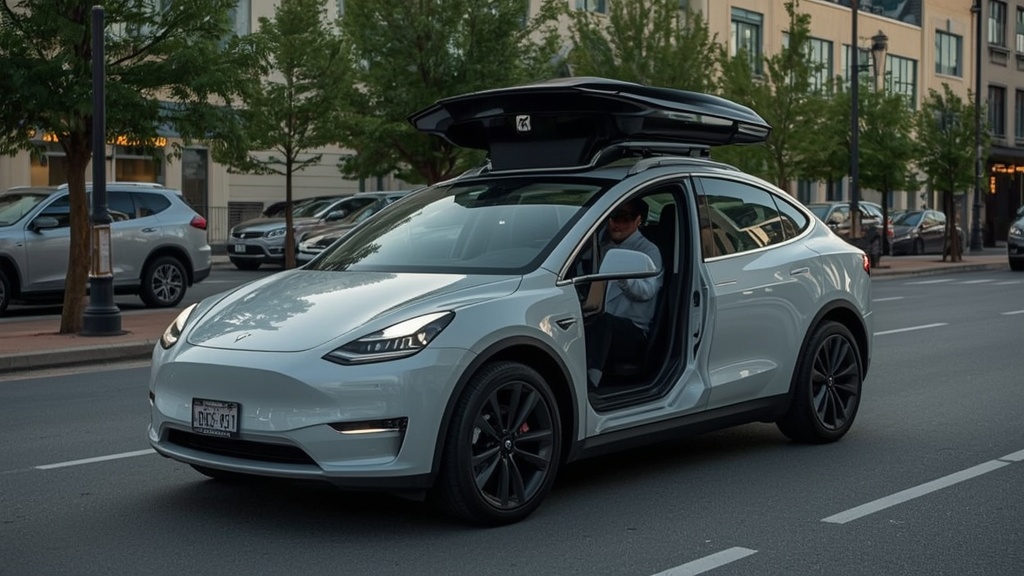
The National Federation of the Blind held their annual convention in Austin on July 3, and Tesla showed up with a Cybercab. Not to journalists. Not to tech influencers. To blind riders. And honestly, this is one of the more sensible product demos Tesla has pulled off in a while.
Think about who actually benefits most from a steering-wheel-free robotaxi. People with cars can already get themselves places. But for people who are blind or have mobility impairments, a fully autonomous vehicle isn't a convenience upgrade. It's access to transportation they don't currently have. Targeting the National Federation of the Blind first isn't charity marketing. It's showing the product to the people with the clearest reason to want it.
What the Cybercab Actually Has
The interior accommodations are more specific than I expected. Braille lettering on physical controls, including door releases and emergency buttons. Space for guide dogs, service animals, canes, and other assistive devices. Seating at wheelchair height so riders aren't climbing up into a vehicle or dropping down into one.
That last point matters more than it sounds. Anyone who's helped someone with mobility challenges into a standard car knows how awkward the geometry gets. Wheelchair-height seating removes that friction before it starts.
And the no-steering-wheel design, which gets plenty of skeptical coverage as a regulatory obstacle, is actually what makes this work for the people in that Austin convention hall. Nothing in the way. The vehicle is built around the assumption that nobody in it is going to drive, and for once that's a feature rather than a controversy.
The Context This Sits In
Tesla had a strong Q2 2026 by most measures. Deliveries hit 480,126 vehicles, a 25% year-over-year increase that cleared Wall Street estimates of roughly 400,000 to 408,000 units. That ended two consecutive years of annual delivery declines. FSD also expanded to select European markets during the same quarter, alongside lower-cost versions of the Model 3 and Model Y.
The Cybercab is a different kind of product than any of that. There's no existing competitor to benchmark against yet, and the value case is most obvious for people who currently can't drive themselves. Whatever the marketing intent behind the Austin demo, putting the vehicle in front of the National Federation of the Blind was at minimum the right instinct about audience.
What Remains to Be Seen
The accessibility features look good on paper. Whether the Braille labeling holds up through wear and use, whether the service animal space works for dogs of different sizes, whether the emergency controls are intuitive enough under actual stress. None of those questions get answered until people are using the vehicle in the real world.
But as a choice about where to start the demo tour: showing a driverless vehicle to blind riders before putting it in front of auto media is at least the right order of operations. The people in that Austin convention hall have the most concrete use case for something like this. Starting there makes sense. Continuing there will matter more.
Source: Teslarati