Tesla Built Its 10 Millionth Car. The Charging Part Is More Interesting.
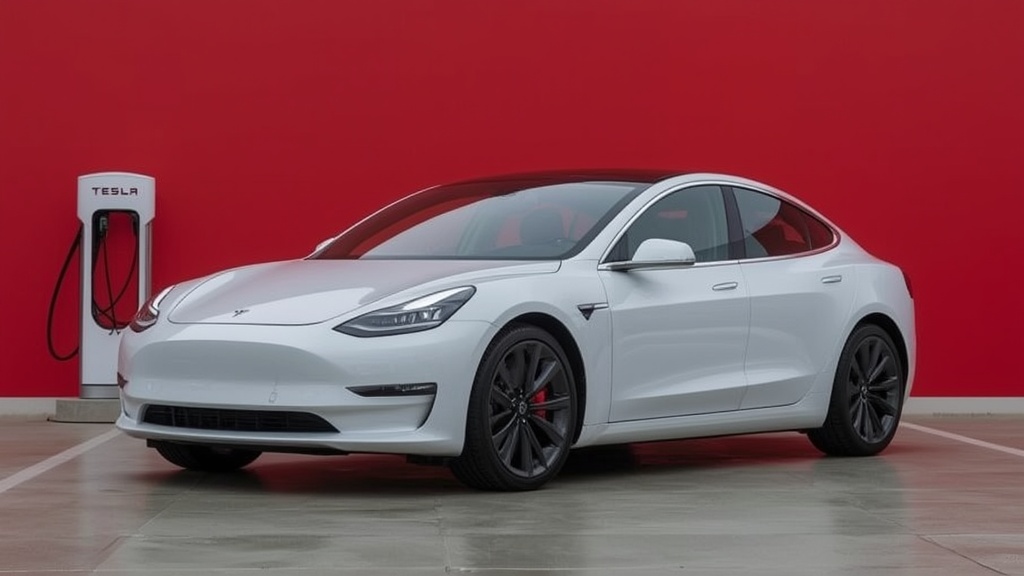
Tesla officially confirmed on July 30, 2026, that it's built 10 million vehicles. The milestone car was a Diamond Black Model Y, which will go down in some company record somewhere while probably getting driven to Costco like every other Model Y on the planet. But the real number worth sitting with isn't 10 million. It's the one hiding in plain sight: Ford, GM, and Stellantis are now reliant on Tesla's charging infrastructure to sell their own EVs.
Ten Million Cars in About 18 Years
Tesla has been producing electric vehicles for approximately 18 years. That's it. One and a half decades to go from a startup that most of the auto industry wrote off as a science project to 10 million vehicles across four manufacturing facilities on three continents.
Those four factories are Fremont (California), Gigafactory Shanghai, Gigafactory Berlin, and Gigafactory Texas in Austin. And each one came with skeptics predicting failure. Each one is running.
10 million isn't a huge number in global automotive terms, but context matters here. 18 years to build a charging network, a software platform, four factories, and enough brand loyalty that the competition had to adopt your plug standard is a different kind of achievement. Most automakers don't survive 18 years of being wrong-footed.
The Competitor Dependency Is the Real Story
Ford, GM, and Stellantis are reliant on Tesla's charging infrastructure. Not partnering with it. Not integrating it as one option among several. Reliant on it.
Think about that from an ownership angle. When I pull up to a Supercharger, I'm using infrastructure that the legacy automakers couldn't build at scale and eventually stopped trying to. And now their customers plug into the same network. The companies that spent decades dismissing Tesla are now dependent on Tesla to make their own EVs viable on a road trip.
This didn't happen because Tesla won a government contract or got lucky. It happened because Superchargers work. That's the practical outcome after 18 years. It's a durable advantage in a way that headline specs rarely are, because you can't catch up to a network by announcing one.
FSD Is Running at Scale
Tesla Full Self-Driving is currently being used by millions of people. Not in a test program. Not in a geo-fenced zone in one city. Millions of drivers, in actual conditions, on actual roads.
I'm deliberately not calling this a breakthrough, because that word has been drained of meaning in the autonomous driving conversation. What I'll say is that millions of real-world users across diverse conditions represents a dataset scale that matters, regardless of where FSD sits on any particular benchmark or regulatory approval list.
What the Number Actually Represents
Honestly, production milestones are mostly PR events. The 10 millionth Diamond Black Model Y isn't special. The person who buys it will probably never know, or particularly care.
But the number does represent something real: 10 million vehicles in service, generating data, requiring software updates, charging on a network that three of the largest automakers in the world now depend on. That's infrastructure at a scale that took about 18 years to build.
The next 10 million will come faster. That's just how manufacturing ramps work. And each one will charge on a network that Ford and GM can't afford to build themselves at this point. That's the part of the story worth watching.
Source: Teslarati